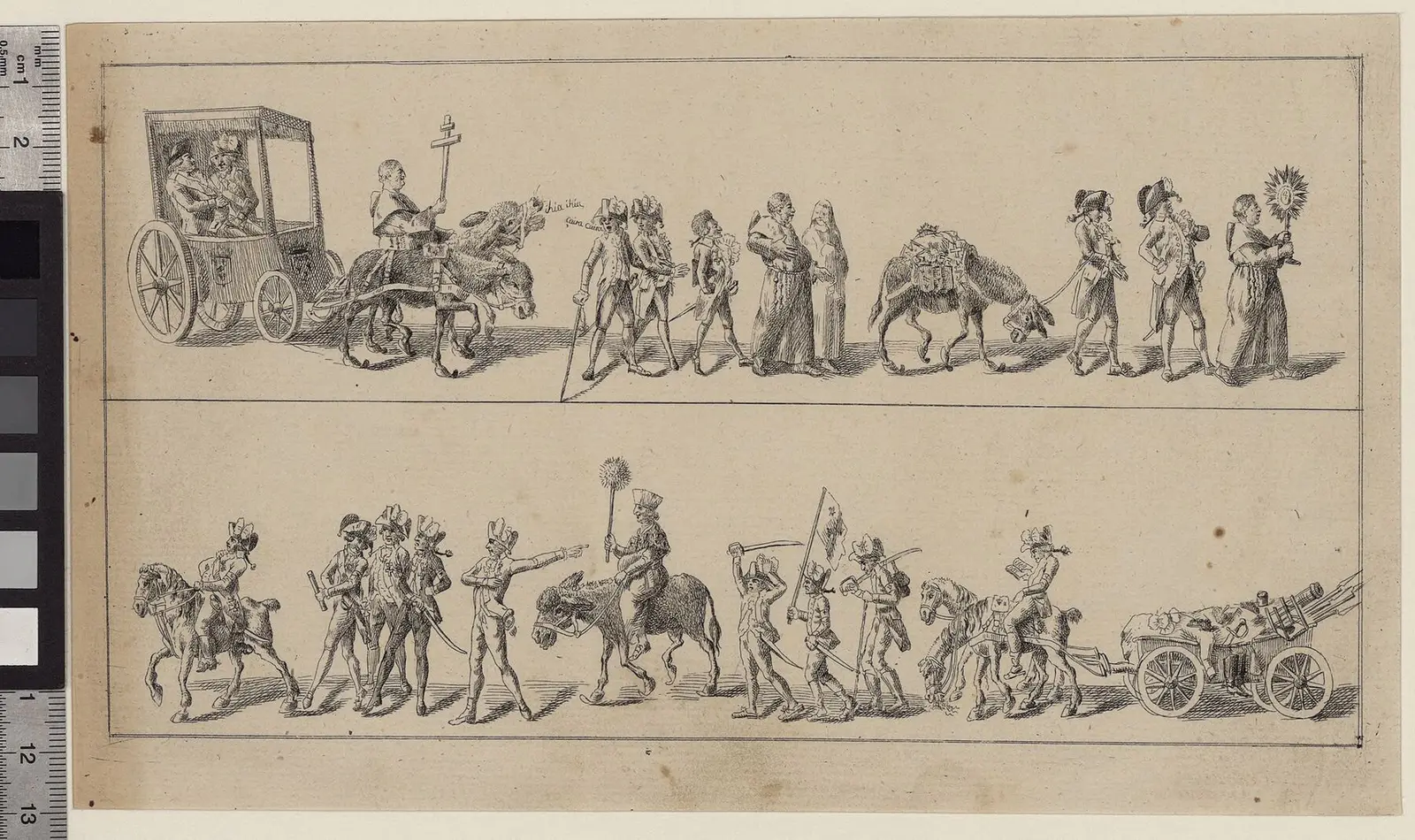
Saint Deicolus and the Boar
Practical reuse

Use this artwork.

Verified CC0

This record carries an explicit open-use marker in the source metadata. Download the publication copy or follow the museum record for its master image.

Download publication WebP Open museum master ↗
Rights signal
CC0
Publication file
1249 × 893 px · WebP
Suggested credit
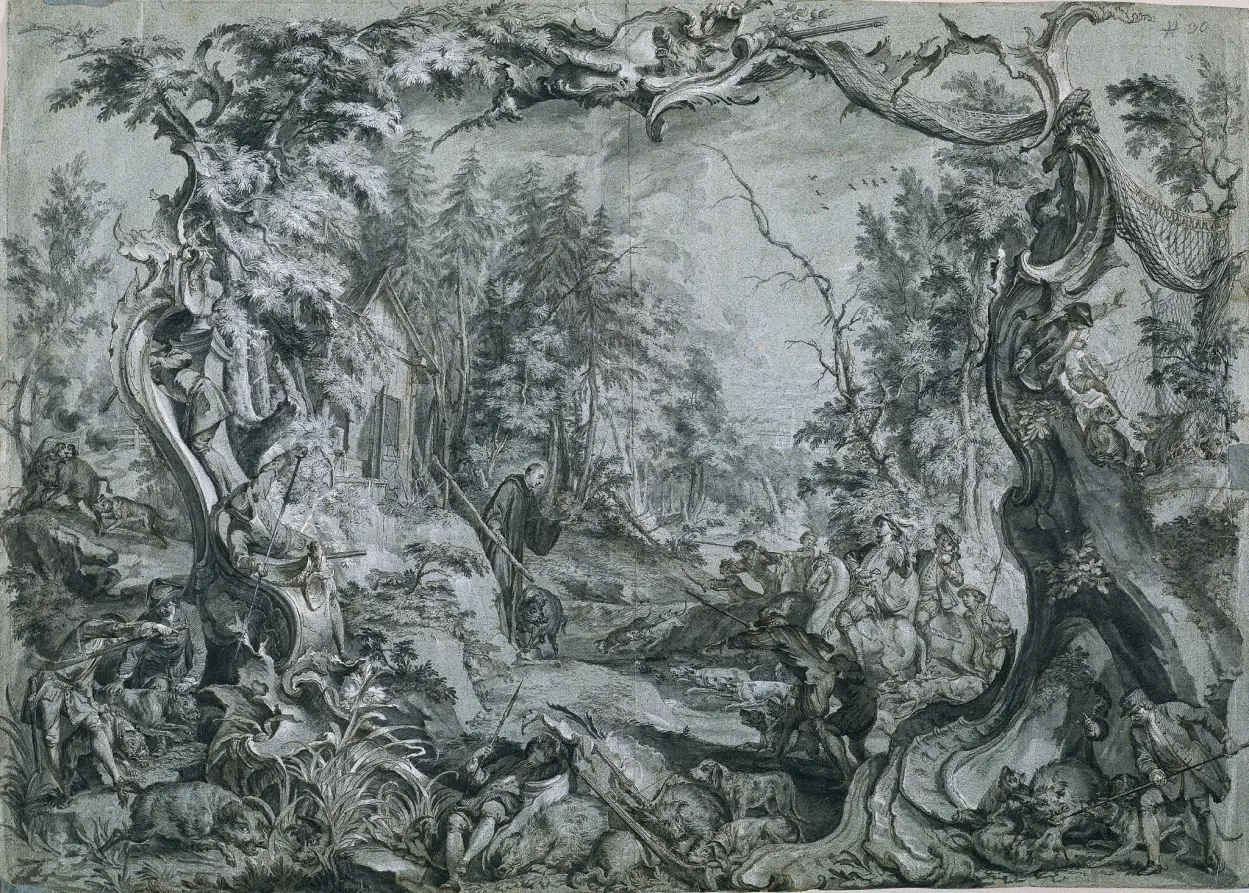
Saint Deicolus and the Boar by Johann Wolfgang Baumgartner (German, 1712–1761) (1747–48). Dudley P. Allen Fund Rights: CC0. https://clevelandart.org/art/1967.22

Vault de Lupin makes the source signal legible; it does not provide legal advice or replace the institution’s current rights statement.

From the museum record

German artist Johann Wolfgang Baumgartner's innovations in rococo design are magnificently demonstrated in this sheet showing the story of Saint Deicolus and the Boar. The format of the work imitates that of a decorative cartouche, an ornamental framework surrounding an open field usually reserved for an inscription or emblem. Baumgartner ingeniously adapted the cartouche form for this scene: the framing elements seem to grow out of the landscape but are clearly artificial, and have the appearance of exuberant metalwork intertwined with vegetation and rocks. Deicolus was an Irish saint who founded an abbey in the Burgundy region of France. Baumgartner shows an incident in which Deicolus saved a boar from the hunting party of the ruler Clotaire II. The highly finished drawing on blue paper was made as a design for print from a suite combining saints with depictions of the hunt.

Lupin’s visual index

A dramatic monochrome engraving depicts a group of figures within a dense, overgrown forest landscape.

Machine-assisted description · useful for discovery, not scholarship.
Continue looking

Nearby in the vault.

Saint Deicolus and the Boar

Saint Deicolus and the Boar · Johann Wolfgang Baumgartner (German, 1712–1761)

Your private shortlist

Saved works 0

Stored only in this browser. No account, tracking, or upload.

No works saved yet.

Use “Save work” on any catalogue card or artwork record to build a working collection.