Vol. I · The open image paperWinnipeg · Musée sans mursRecovered · Remembered · Returned
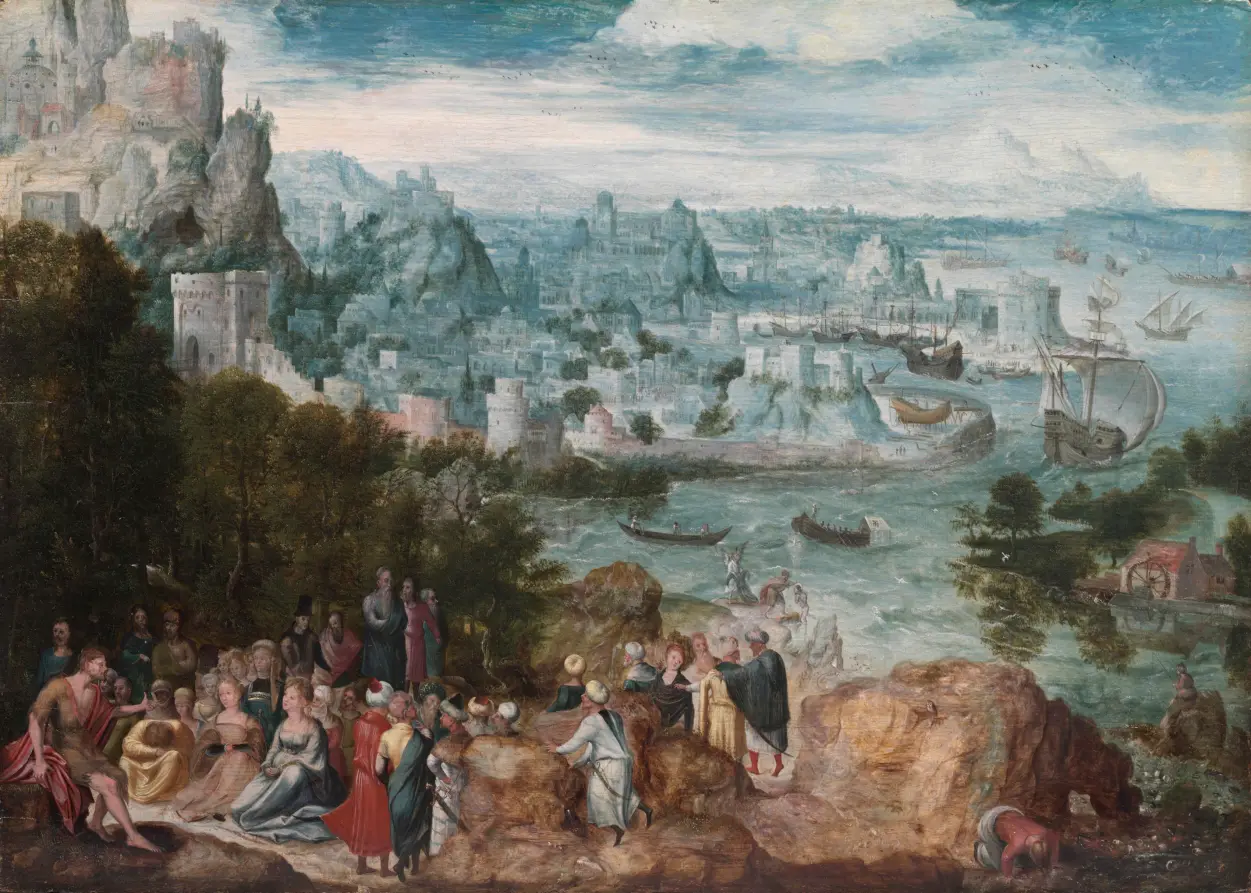
Cleveland Museum of Art143261landscapeHerri met de Bles (Flemish, 1510–1572)c. 1540CC0cma sacred-art landscapes objects-with-gravity sacred art objects with gravity ancient city siege battle port city landscape historical painting renaissance oil painting seascape religious scene soldiers civilians boats mountains muted colors detailed complex composition saint john the baptistHerri met de Bles (Flemish, 1510–1572) c. 1540 Flanders oil on wood Painting European LandscapeSacred & Devotional Horizons & Places Objects with Gravity
Practical reuse
Use this artwork.
Verified CC0
This record carries an explicit CC0 marker in the source metadata. Download the publication copy or follow the source record for its master image.
Landscape with Saint John the Baptist by Herri met de Bles (Flemish, 1510–1572) (c. 1540). Andrew R. and Martha Holden Jennings Fund Rights: CC0. https://clevelandart.org/art/1967.20
Vault de Lupin makes the source signal legible; it does not provide legal advice or replace the institution’s current rights statement.
From the museum record
This picture is an example of the so-called world landscape, a term coined by art historians to characterize a type of Northern landscape painting with a vast panorama and a narrative religious subject in the foreground. This type of landscape, popularized by the Flemish painter Joachim Patinir (about 1485-1524), was fashionable throughout the 16th century. Bles placed the group of exotically dressed figures on a piece of land overlooking a great panorama of mountains, coast, and sea. The view of the harbor city is purely imaginative, and the fanciful cliffs and mountain peaks that crowd the distance seem to disappear into a light mist. This manner of creating depth in the landscape, called the atmospheric or aerial perspective, was an invention of Leonardo da Vinci (1452-1519). Bles was acclaimed in Italy as the Master of the Owl (il Civetta), after the bird he often put into his works. In this scene, the owl is situated on the rock in the lower-right foreground.
Lupin’s visual index
This painting depicts a chaotic scene of a coastal city under siege, with soldiers and civilians amidst naval activity.
Machine-assisted description · useful for discovery, not scholarship.