Vol. I · The open image paperWinnipeg · Musée sans mursRecovered · Remembered · Returned
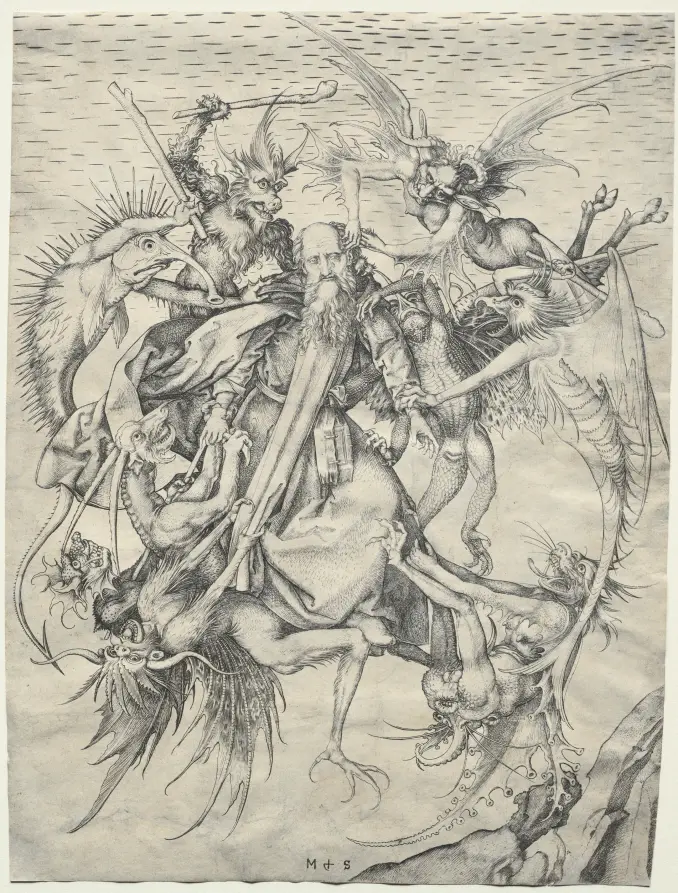
Cleveland Museum of Art105001portraitMartin Schongauer (German, c. 1450–1491)1470–75CC0cma mythology portraits design-assets ink-paper-impressions objects-with-gravity design assets ink paper impressions objects with gravity engraving woodcut demon biblical fantasy dark detailed medieval renaissance horror battle composition old master druckdruck grimm satirical the temptation anthonyMartin Schongauer (German, c. 1450–1491) 1470–75 Germany engraving Print European ReligiousMyth & Metamorphosis Faces in Time The Maker’s Cabinet Ink, Paper & Impressions Objects with Gravity
Practical reuse
Use this artwork.
Verified CC0
This record carries an explicit CC0 marker in the source metadata. Download the publication copy or follow the source record for its master image.
The Temptation of St. Anthony by Martin Schongauer (German, c. 1450–1491) (1470–75). Dudley P. Allen Fund Rights: CC0. https://clevelandart.org/art/1923.227
Vault de Lupin makes the source signal legible; it does not provide legal advice or replace the institution’s current rights statement.
From the museum record
Saint Anthony (c. AD 251–356) was an Egyptian hermit known for having established the ideal of monasticism, seclusion, and meditation in Christianity. According to the Life of Saint Anthony written by the 20th bishop of Alexandria Athanasius (c. AD 360), Anthony was assaulted by several demons and tormented by erotic visions during his retreat to the Eastern Desert of Egypt. Martin Schongauer's print marks the very moment in which a highly animated demonic attack took place in the sky. Nine whimsical monsters—composed of reptilian, mammalian, and fish- and bird-like parts—flap, blow, and grasp a stiff and indifferent Saint Anthony. With his firm discipline, the saint epitomizes the Christian's struggle to resist evil temptations.
Lupin’s visual index
This intricate engraving depicts a chaotic battle scene featuring demonic figures surrounding a central, bearded figure, likely representing Nebuchadnezzar II.
Machine-assisted description · useful for discovery, not scholarship.