Vol. I · The open image paperWinnipeg · Musée sans mursRecovered · Remembered · Returned
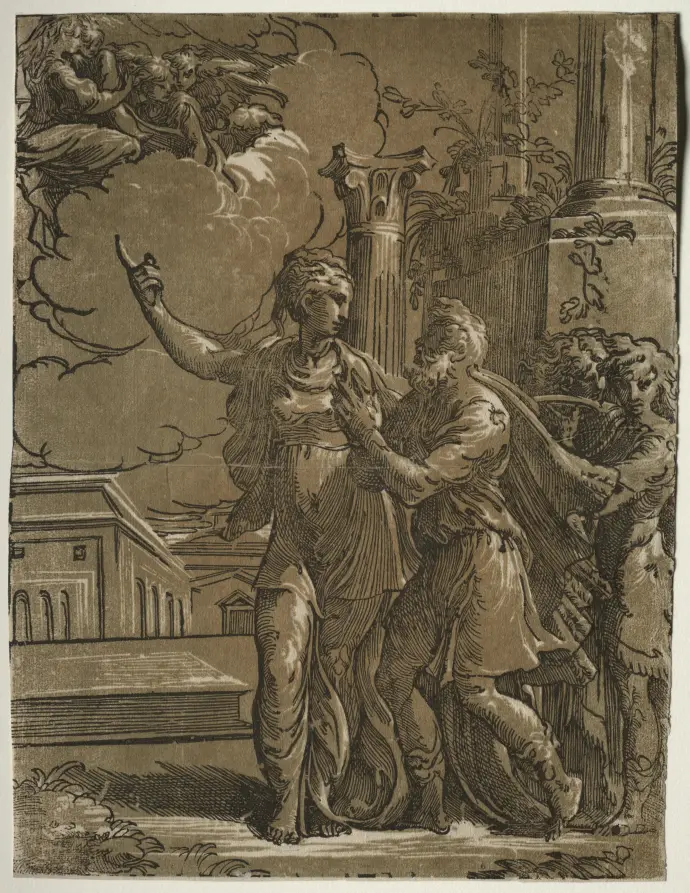
Cleveland Museum of Art104845portraitParmigianino (Italian, 1503–1540)c. 1527–30/31CC0cma mythology portraits landscapes design-assets ink-paper-impressions objects-with-gravity design assets ink paper impressions objects with gravity engraving roman ancient architecture figures landscape classical brown tones detailed etching antique history art sepia religious portrait tiburtine sibyl and the emperor augustusParmigianino (Italian, 1503–1540) c. 1527–30/31 Italy, 16th century chiaroscuro woodcut (in brown-green and black), [object Object] Print European MythologicalMyth & Metamorphosis Faces in Time Horizons & Places The Maker’s Cabinet Ink, Paper & Impressions Objects with Gravity
Practical reuse
Use this artwork.
Verified CC0
This record carries an explicit CC0 marker in the source metadata. Download the publication copy or follow the source record for its master image.
Tiburtine Sibyl and the Emperor Augustus by Parmigianino (Italian, 1503–1540) (c. 1527–30/31). Dudley P. Allen Fund Rights: CC0. https://clevelandart.org/art/1923.115
Vault de Lupin makes the source signal legible; it does not provide legal advice or replace the institution’s current rights statement.
From the museum record
This print depicts the Roman Emperor Augustus (reigned 27 BC–AD 14) and the Tiburtine Sybil, one of several women that Apollo bestowed with prophetic powers. Augustus was deciding whether or not to accept apotheosis (recognition of the emperor as a god after death) and asked the Tiburtine Sybil for advice. At the moment the two met on the Capitoline Hill, the Madonna and Christ the Child appeared before them, revealing the coming of the child as the one who would have surpassed Augustus in ruling the world. Upon the site of the vision, Augustus had built an altar, the Aracoeli. Later, on the same spot, the church of Santa Maria in Aracoeli was erected. Antonio da Trento probably made this print under the direct supervision of Parmigianino. In later printings, Antonio da Trento's line block went through two state changes. The CMA example represents the second state, characterized by the addition of hatching to the cheek of the attendant at the left of the composition.
Lupin’s visual index
An engraving depicts two figures, possibly Roman, gesturing towards a distant architectural structure within a cloudy, atmospheric setting.
Machine-assisted description · useful for discovery, not scholarship.