Vol. I · The open image paperWinnipeg · Musée sans mursRecovered · Remembered · Returned
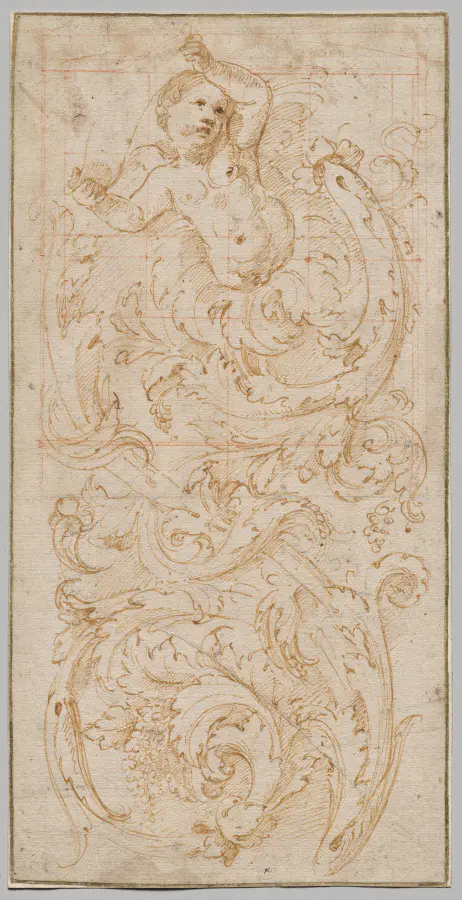
Cleveland Museum of Art378674portraitGiulio Romano (Italian, 1492/99–1546)c. 1520CC0cma sacred-art mythology portraits design-assets ink-paper-impressions sacred art design assets ink paper impressions angel cherub drawing brown ink ornate scrolls volutes renaissance italian art classical decorative line art sketch draft fantasy antique for frieze putto and acanthus leavesGiulio Romano (Italian, 1492/99–1546) c. 1520 Italy, 16th century Pen and brown ink, red and black chalk Drawing European ReligiousSacred & Devotional Myth & Metamorphosis Faces in Time The Maker’s Cabinet Ink, Paper & Impressions
Practical reuse
Use this artwork.
Verified CC0
This record carries an explicit CC0 marker in the source metadata. Download the publication copy or follow the source record for its master image.
Design for a Frieze with a Putto and Acanthus Leaves by Giulio Romano (Italian, 1492/99–1546) (c. 1520). Anne Elizabeth Wilson Memorial Fund Rights: CC0. https://clevelandart.org/art/2020.70
Vault de Lupin makes the source signal legible; it does not provide legal advice or replace the institution’s current rights statement.
From the museum record
After working to fresco the papal apartments in Rome under Raphael in the 1510s, Giulio Romano became the court artist to Federico II Gonzaga, 1st Duke of Mantua (r. 1530–40), where his universal talents as an architect, designer, and painter transformed the duke’s unadorned Palazzo del Te into an elaborate setting for leisure and courtly activity. It was through drawings that Giulio planned everything from the most important narrative sequences of the palace, to the most seemingly insignificant ornamental details. This drawing—perhaps a design for a rinceaux, a frescoed decoration to the side or above a doorway—depicts Giulio’s typically inventive approach to classical ornament, with acanthus leaves that twirl together in a complex figure-eight pattern and a putto emerging from the floral center.
Lupin’s visual index
A detailed brown ink drawing depicts a cherubic angel amidst elaborate, swirling foliage and drapery.
Machine-assisted description · useful for discovery, not scholarship.