Vol. I · The open image paperWinnipeg · Musée sans mursRecovered · Remembered · Returned
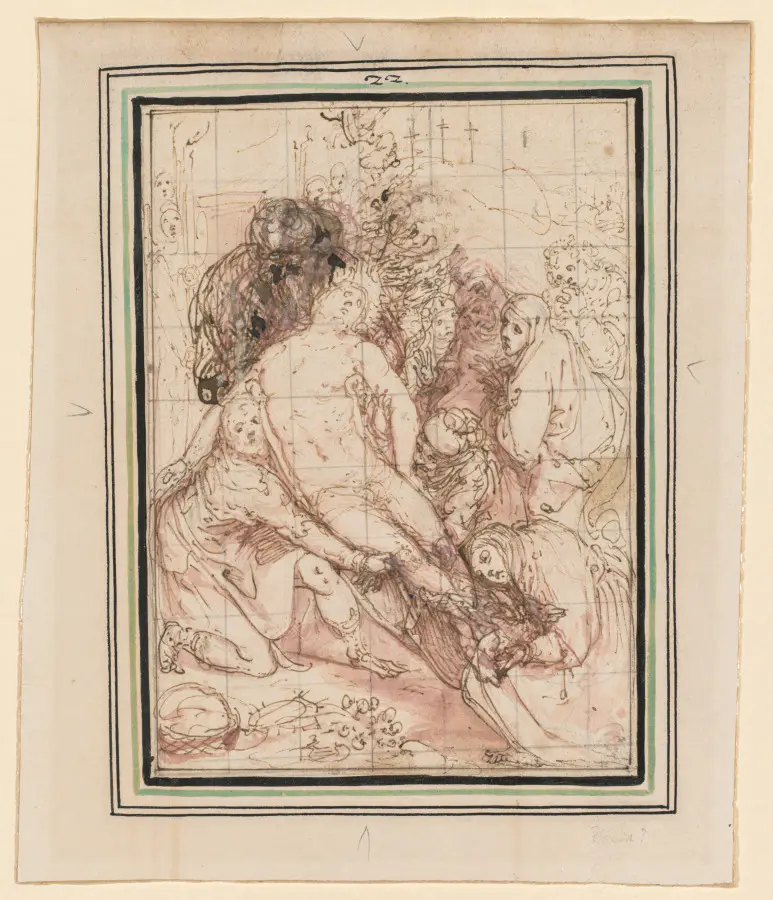
Cleveland Museum of Art295476portraitGiovanni de' Vecchi (Italian, 1536–1615)c. 1596CC0cma portraits flora-fauna design-assets ink-paper-impressions flora fauna design assets ink paper impressions nude woman drawing brown ink anatomy figure study classical renaissance sketch draft antique detailed intricate architecture composition gesture line drawing old master the entombmentGiovanni de' Vecchi (Italian, 1536–1615) c. 1596 Italy Pen and brown ink, brush and purple-pink wash with admixtures of white, and brush and brown wash, with graphite underdrawing; squared for transfer with graphite Drawing European DecorativeFaces in Time The Living World The Maker’s Cabinet Ink, Paper & Impressions
Practical reuse
Use this artwork.
Verified CC0
This record carries an explicit open-use marker in the source metadata. Download the publication copy or follow the museum record for its master image.
The Entombment by Giovanni de' Vecchi (Italian, 1536–1615) (c. 1596). Purchase from the J. H. Wade Fund Rights: CC0. https://clevelandart.org/art/2017.5
Vault de Lupin makes the source signal legible; it does not provide legal advice or replace the institution’s current rights statement.
From the museum record
By the end of the 1500s, Michelangelo’s treatment of the nude male had permeated artistic practice. Some artists (today called Mannerists) began to stray from the master’s grounding in human anatomy, emphasizing instead the expressive potential that Michelangelo brought to bear on the human form. To make an emotional impact, Giovanni de’ Vecchi created fluid figures with exaggerated proportions, such as the central figure of Christ that appears here. De’ Vecchi used pen and purplish watercolor to render the forms of the dead Christ surrounded by Saint John the Apostle, Nicodemus, Joseph of Arimathea, the grief-stricken Virgin Mary, Saint Mary Magdalene (at Christ’s feet), and their companions, who adoringly convey his body to the tomb in the upper left. This drawing was preparatory for an altarpiece for the church of Santa Prassede in Rome.
Lupin’s visual index
A detailed brown ink drawing depicts a nude woman in a contorted pose, surrounded by intricate drapery and architectural elements.
Machine-assisted description · useful for discovery, not scholarship.
.webp)