Vol. I · The open image paperWinnipeg · Musée sans mursRecovered · Remembered · Returned
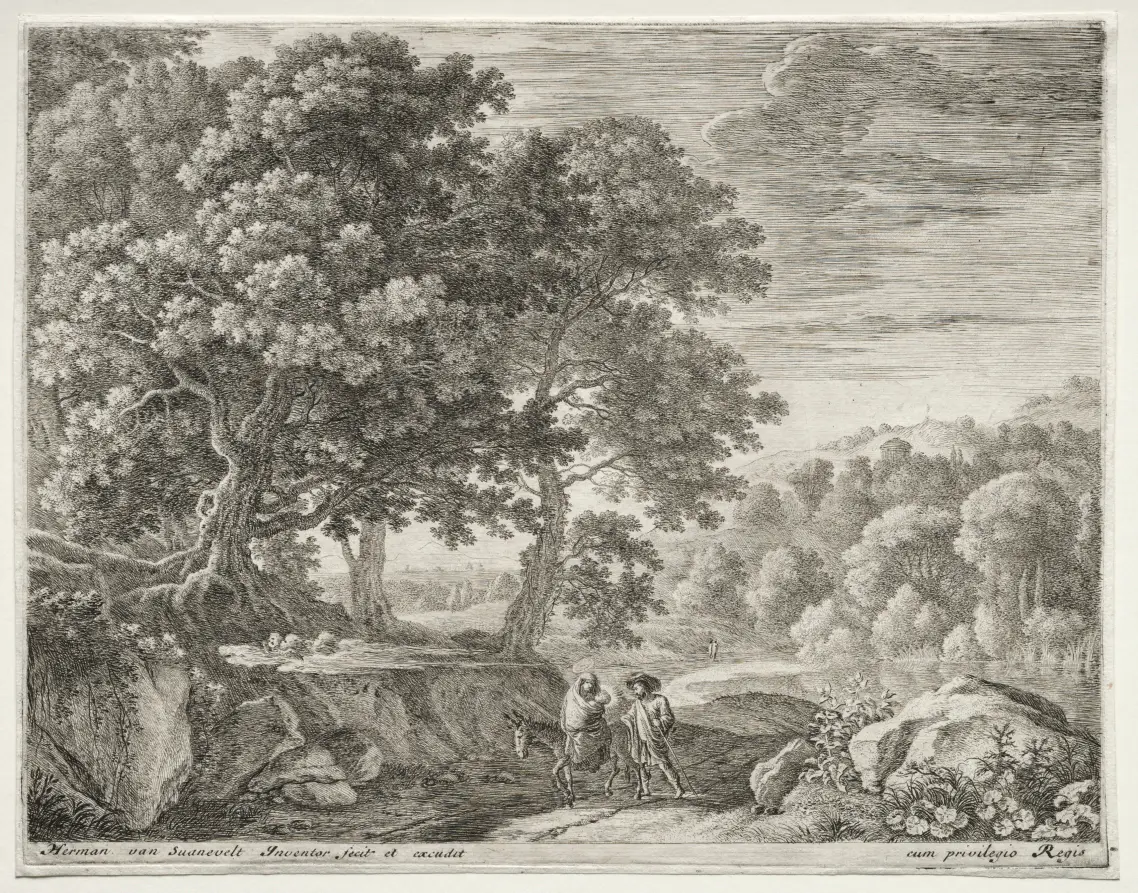
Cleveland Museum of Art153802landscapeHerman van Swanevelt (Dutch, c. 1600–1655)c. 1652–54CC0cma sacred-art portraits landscapes flora-fauna design-assets ink-paper-impressions objects-with-gravity night-dreams sacred art flora fauna design assets ink paper impressions objects with gravity night dreams landscape woodland engraving etching rural nature trees path man donkey shadows gray brown 17th century classical still life atmospheric detailed composition the little angels hillHerman van Swanevelt (Dutch, c. 1600–1655) c. 1652–54 Netherlands etching and engraving Print European LandscapeSacred & Devotional Faces in Time Horizons & Places The Living World The Maker’s Cabinet Ink, Paper & Impressions Objects with Gravity Night, Dreams & Apparitions
Practical reuse
Use this artwork.
Verified CC0
This record carries an explicit open-use marker in the source metadata. Download the publication copy or follow the museum record for its master image.
The Little Angels on the Hill by Herman van Swanevelt (Dutch, c. 1600–1655) (c. 1652–54). Gift of Louise S. Richards in appreciation of The Print Club of Cleveland Rights: CC0. https://clevelandart.org/art/1987.92.1
Vault de Lupin makes the source signal legible; it does not provide legal advice or replace the institution’s current rights statement.
From the museum record
This series by Herman Swanevelt, The Flight into Egypt, illustrates an event from the New Testament of the Bible. Joseph, Mary, and Christ fled into Egypt to escape King Herod's persecution. Traditionally represented as a single image, Swanevelt enlarged the story into four scenes. The Holy family is first shown traveling with three angels behind them, then Joseph helps Mary off the donkey, next Joseph leads the donkey to water as Mary changes the child, and finally the family is at rest. However, the main focus of each of these prints is the depiction of landscape, a genre that reached unprecedented levels of popularity during the 1600s. The scenery, looking much more like the Italian countryside than Egypt, was inspired by Swanevelt's paintings. Although he was Dutch, he spent most of his career in Paris and Rome. As a painter, he was known for his ability to convey warm, glowing sunlight, a quality also found in his etchings.
Lupin’s visual index
A detailed engraving depicts a tranquil woodland scene with a man and donkey traversing a shaded path.
Machine-assisted description · useful for discovery, not scholarship.
.webp)