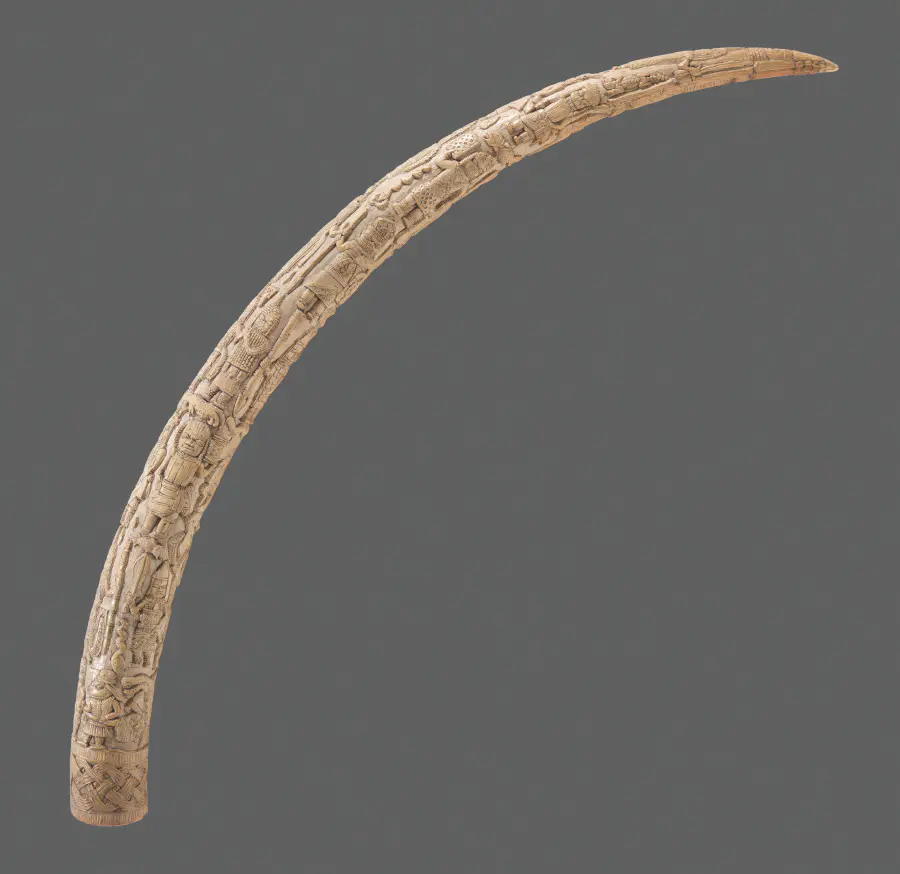
Ancestral Altar Tusk
Practical reuse

Use this artwork.

Verified CC0

This record carries an explicit open-use marker in the source metadata. Download the publication copy or follow the museum record for its master image.

Download publication WebP Open museum master ↗
Rights signal
CC0
Publication file
900 × 874 px · WebP
Suggested credit
Ancestral Altar Tusk (c. 1820). Gift of Katherine C. White Rights: CC0. https://clevelandart.org/art/1968.284

Vault de Lupin makes the source signal legible; it does not provide legal advice or replace the institution’s current rights statement.

From the museum record

Ọba Ọsẹmwẹdẹ commissioned the carving of this tusk to connect with his ancestors and symbolize his strength. It is covered with royal figures wearing elaborate regalia and scenes of power, ritual, and violence. While Benin royal symbols may look similar across centuries, their meanings can shift. Ọsẹmwẹdẹ’s reign was prosperous due to trade with the Dutch; however, 16th-century Portuguese men are carved on the lower tusk. By the 1800s they represented any European traders. This tusk’s surface likely became worn and cracked from frequent washing, bleaching, and the applying of a white clay ( orhue ) linked to peace, purity, and prosperity.

Lupin’s visual index

A detailed ivory carving depicts a bustling ancient city scene with figures and architectural elements.

Machine-assisted description · useful for discovery, not scholarship.
Continue looking

Nearby in the vault.

Ancestral Altar Tusk

Ancestral Altar Tusk

Your private shortlist

Saved works 0

Stored only in this browser. No account, tracking, or upload.

No works saved yet.

Use “Save work” on any catalogue card or artwork record to build a working collection.