Vol. I · The open image paperWinnipeg · Musée sans mursRecovered · Remembered · Returned
Cleveland Museum of Art126219portraitAlbrecht Altdorfer (German, c. 1480–1538)c. 1517CC0cma mythology portraits design-assets ink-paper-impressions design assets ink paper impressions woman fruit drawing sketch monochrome linework renaissance italian allegory portrait figure brown detailed antique classical female still life salome the head john baptistAlbrecht Altdorfer (German, c. 1480–1538) c. 1517 Germany pen and brown ink and brush and brown wash and white gouache; framing lines in pen and black ink, [object Object] Drawing European MythologicalMyth & Metamorphosis Faces in Time The Maker’s Cabinet Ink, Paper & Impressions
Practical reuse
Use this artwork.
Verified CC0
This record carries an explicit CC0 marker in the source metadata. Download the publication copy or follow the source record for its master image.
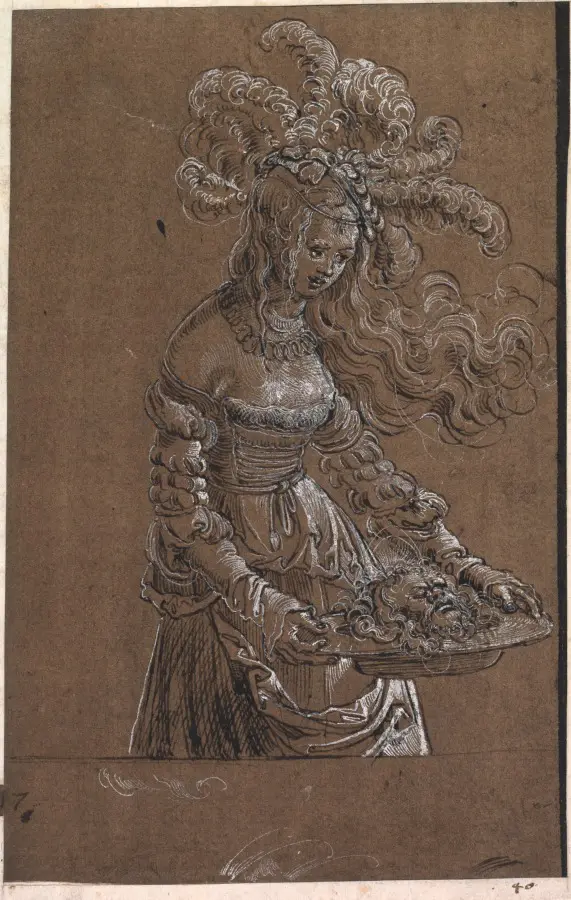
Salome with the Head of St. John the Baptist by Albrecht Altdorfer (German, c. 1480–1538) (c. 1517). John L. Severance Fund Rights: CC0. https://clevelandart.org/art/1948.440
Vault de Lupin makes the source signal legible; it does not provide legal advice or replace the institution’s current rights statement.
From the museum record
Salome's story is described in the biblical Gospels of Mark and Matthew. After dancing for King Herod of Galilee, her new stepfather, she was granted any wish she desired. Influenced by her mother, Herodias, she asked that John the Baptist--who was then imprisoned for condemning Herod and Herodias' marriage--be executed. Here, Salome enacts the most gruesome part of the story, presenting the prophet's head on a platter. In the Renaissance, the story was believed to presage the sacrifice of Christ on the cross and the presentation of the Eucharist during Catholic liturgy. Altdorfer's drawing emphasizes Salome's pride--a dangerous sin--through her elaborate garments, billowing, plumed headdress, and flowing long hair. He articulated these details using black ink highlighted with white gouache on paper darkened with brown wash and a finely pointed pen.
Lupin’s visual index
A meticulously detailed drawing depicts a woman presenting a platter of fruit, rendered in monochrome with intricate linework.
Machine-assisted description · useful for discovery, not scholarship.