Vol. I · The open image paperWinnipeg · Musée sans mursRecovered · Remembered · Returned
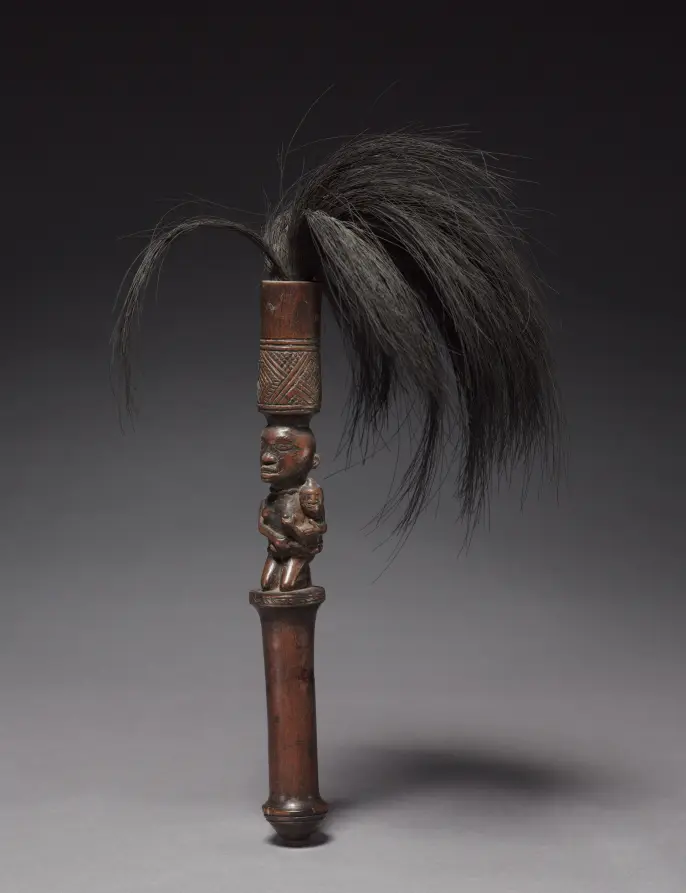
Cleveland Museum of Art168729portraitlate 1800s-early 1900sCC0cma african-global-heritage mythology portraits flora-fauna objects-with-gravity african global heritage flora fauna objects with gravity african art wood carving feather staff tribal art ritual object dark wood black feathers carved figure traditional art cultural artifact museum piece african sculpture wood feathers portrait abstract ethnic historical art object flywhisklate 1800s-early 1900s Africa, Central Africa, Democratic Republic of Congo (most likely), Cabinda, or Republic of the Congo, probably Yombe-style maker Wood and animal hair Sculpture African MythologicalAfrican & Global Heritage Myth & Metamorphosis Faces in Time The Living World Objects with Gravity
Practical reuse
Use this artwork.
Verified CC0
This record carries an explicit open-use marker in the source metadata. Download the publication copy or follow the museum record for its master image.
Flywhisk (late 1800s-early 1900s). René and Odette Delenne Collection, Leonard C. Hanna Jr. Fund Rights: CC0. https://clevelandart.org/art/2010.435
Vault de Lupin makes the source signal legible; it does not provide legal advice or replace the institution’s current rights statement.
From the museum record
In Central Africa, flywhisks denoted status, rank, and function, rather than used to whisk away flies. Commonly associated with chiefs and titleholders, they were also owned by diviners and healers. Their purpose may also have been used to purify spaces, bless people, places, or things, and settle disputes. Flywhisks rarely depict women; yet this finely carved miniature of a woman kneeling signifies obedience and respect.
Lupin’s visual index
A dark brown wooden staff features a carved figurehead and is adorned with a cascade of black feathers.
Machine-assisted description · useful for discovery, not scholarship.
.webp)