Vol. I · The open image paperWinnipeg · Musée sans mursRecovered · Remembered · Returned
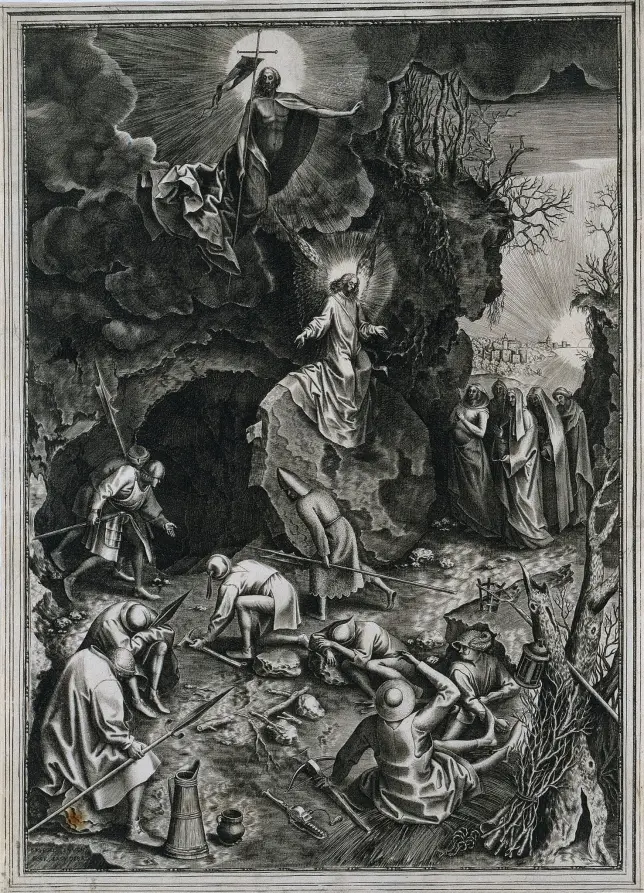
Cleveland Museum of Art159717portraitPhilip Galle (Flemish, 1537–1612)c. 1562CC0cma sacred-art design-assets ink-paper-impressions night-dreams sacred art design assets ink paper impressions night dreams christ resurrection hell engraving etched religious christian dark monochrome graveyard grief 16th century baroque grave stone figures shadows grayscale medieval thePhilip Galle (Flemish, 1537–1612) c. 1562 Netherlands, 16th century engraving Print European ReligiousSacred & Devotional The Maker’s Cabinet Ink, Paper & Impressions Night, Dreams & Apparitions
Practical reuse
Use this artwork.
Verified CC0
This record carries an explicit open-use marker in the source metadata. Download the publication copy or follow the museum record for its master image.
The Resurrection of Christ by Philip Galle (Flemish, 1537–1612) (c. 1562). Leonard C. Hanna Jr. Fund Rights: CC0. https://clevelandart.org/art/1996.5
Vault de Lupin makes the source signal legible; it does not provide legal advice or replace the institution’s current rights statement.
From the museum record
After Christ's crucifixion and burial, he rose from his tomb to dwell on earth for 40 days before ascending to heaven. According to the Gospel account of Matthew, as depicted here, the soldiers guarding the tomb fell asleep and the tomb opened miraculously. Christ appears above, triumphant. For Christians, the resurrection of Christ is essential for the doctrine of salvation and the hope of deliverance from the power and effect of sin. The promise of salvation, of a new day, is symbolized by the rising sun, to which Christ points, and Christ's halo, which resembles a sun. Galle's engraving is based on a monochrome wash drawing by Bruegel. The print, which is the same size as the drawing, but with the image reversed, even retains the frame.
Lupin’s visual index
a stark engraving depicts christ's resurrection and descent into a dark, rocky underworld with grieving followers.
Machine-assisted description · useful for discovery, not scholarship.
.webp)