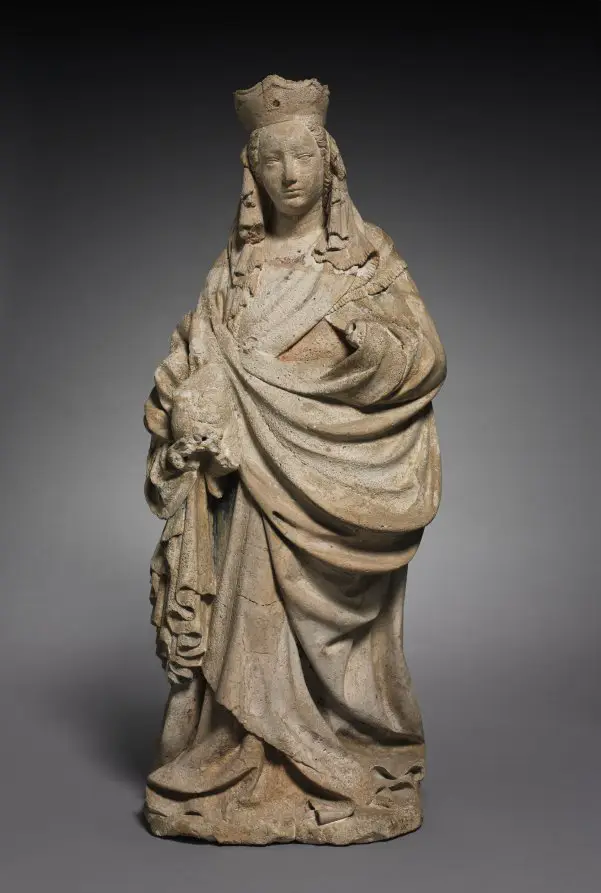
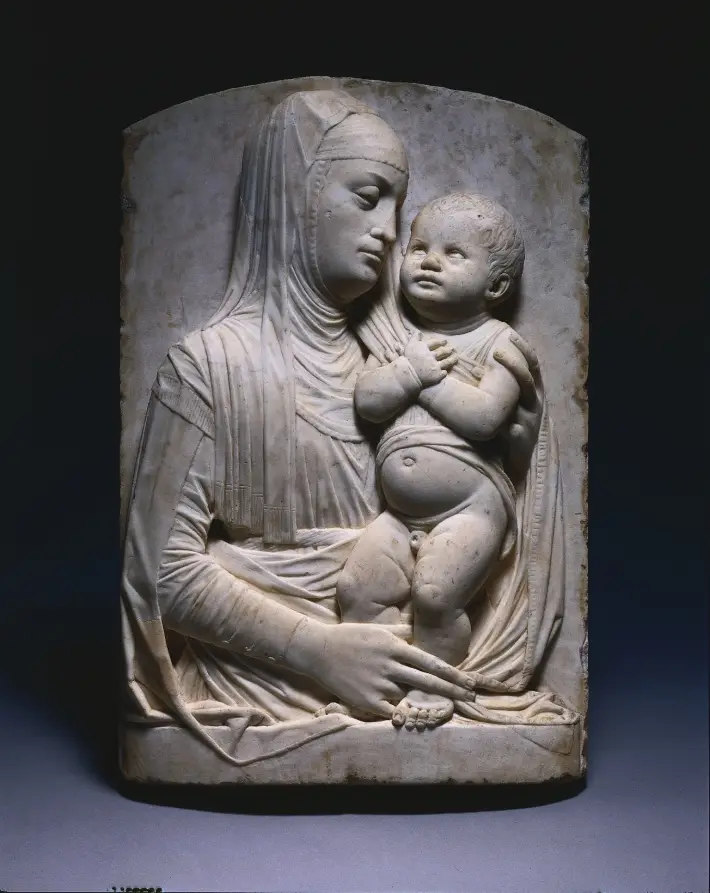
Virgin and Child
Practical reuse

Use this artwork.

Verified CC0

This record carries an explicit open-use marker in the source metadata. Download the publication copy or follow the museum record for its master image.

Download publication WebP Open museum master ↗
Rights signal
CC0
Publication file
601 × 893 px · WebP
Suggested credit
Virgin and Child (c. 1395). Purchase from the J. H. Wade Fund Rights: CC0. https://clevelandart.org/art/1965.236

Vault de Lupin makes the source signal legible; it does not provide legal advice or replace the institution’s current rights statement.

From the museum record

This sculpture—damaged during the 1800s and now missing the figure of the Christ child—is a fine early example of the type known as the Schöne Madonna or "Beautiful Virgin." This type became popular around 1400 and emphasized the graceful curve of the Virgin’s posture combined with deep, slightly exaggerated drapery folds. This sculpture is known to have come from the Church of Mariapfarr in the Diocese of Salzburg. It was made using a casting technique known as "lost shape." The casting consisted of pulverized limestone combined with quicklime and milk curd poured into a mold. After the cementlike mixture set for several weeks, the mold was destroyed to remove the sculpture, which could then be filed, polished, and painted.

Lupin’s visual index

A pale, weathered terracotta sculpture depicts the Virgin Mary holding a small, ornate cross.

Machine-assisted description · useful for discovery, not scholarship.
Continue looking

Nearby in the vault.

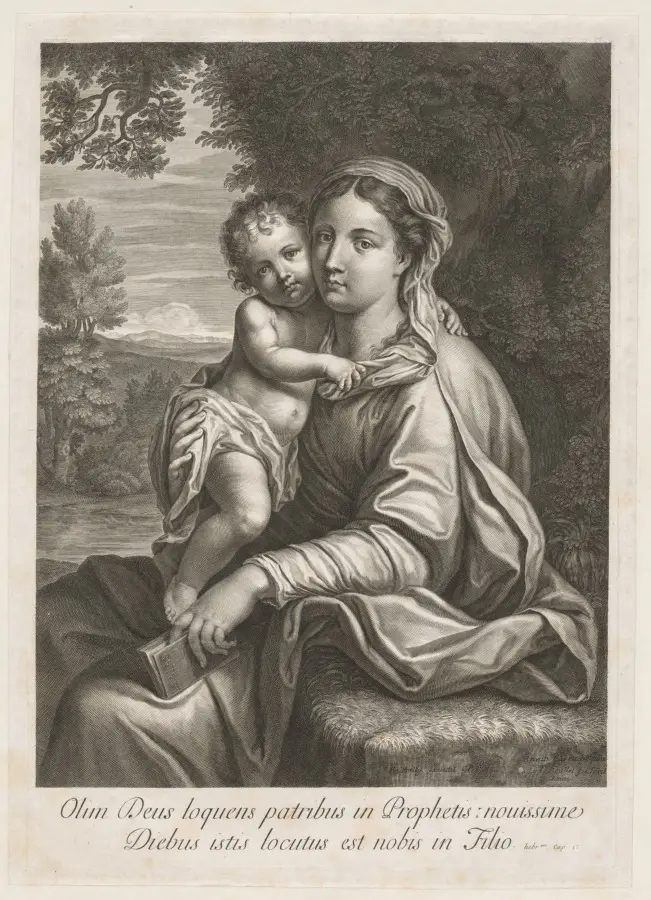
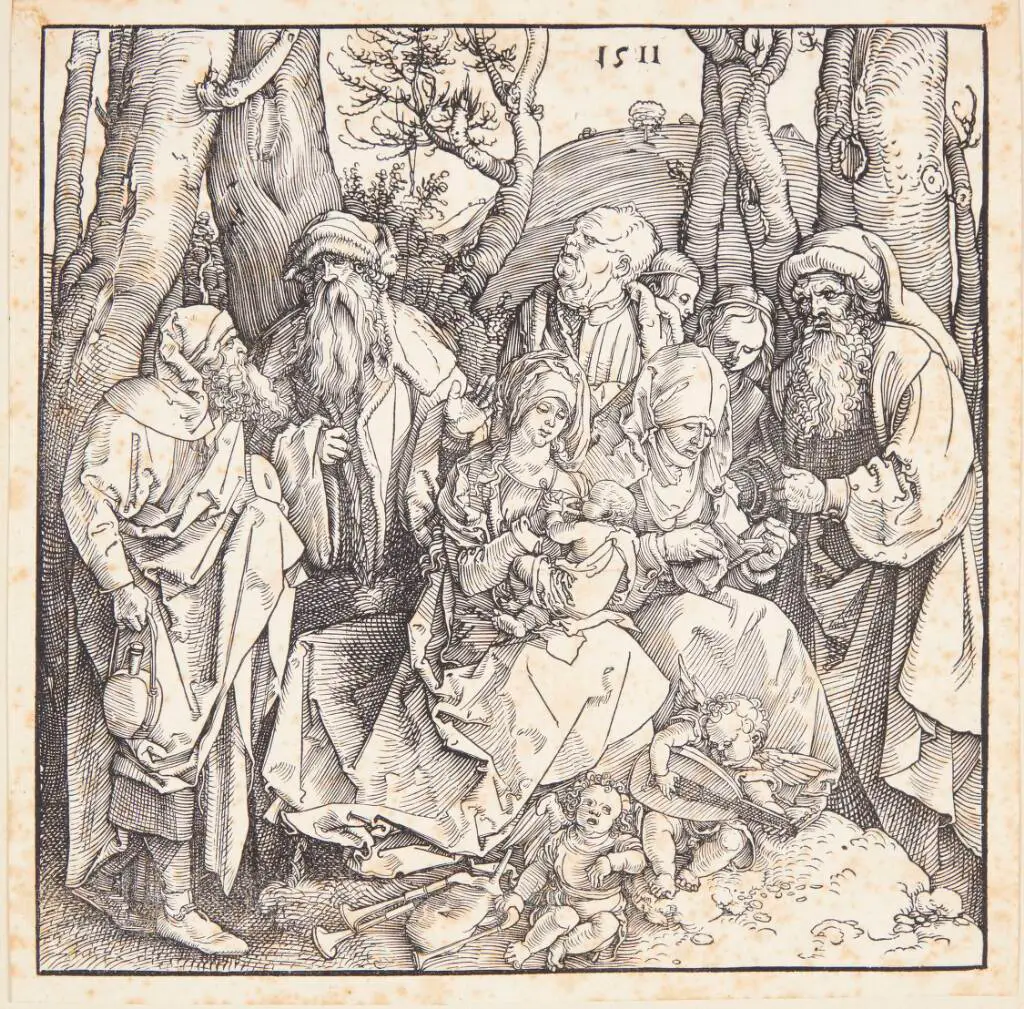
Virgin and Child

Virgin and Child

Your private shortlist

Saved works 0

Stored only in this browser. No account, tracking, or upload.

No works saved yet.

Use “Save work” on any catalogue card or artwork record to build a working collection.