Vol. I · The open image paperWinnipeg · Musée sans mursRecovered · Remembered · Returned
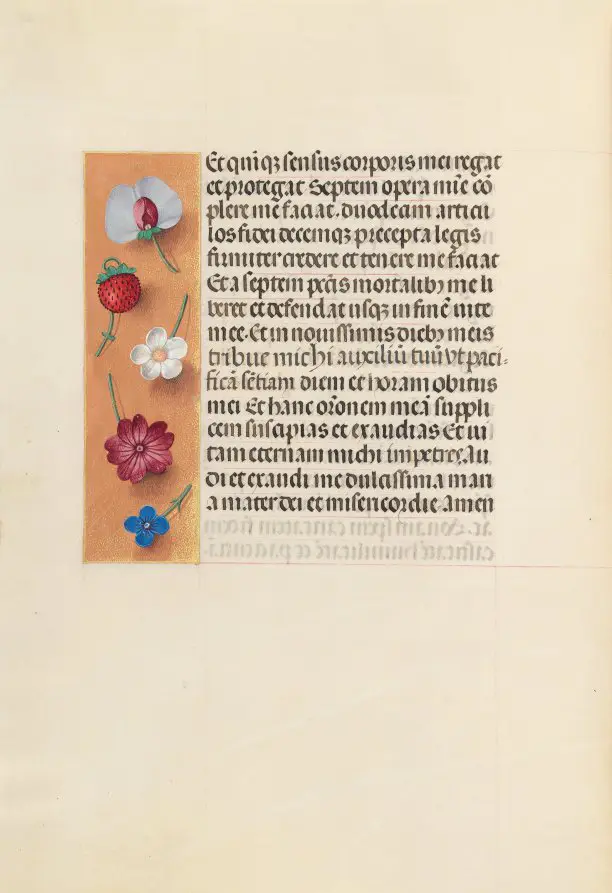
Cleveland Museum of Art139245portraitMaster of the First Prayerbook of Maximillian (Flemish, c. 1444–1519)c. 1500CC0cma symbols-patterns portraits flora-fauna ink-paper-impressions symbols patterns flora fauna ink paper impressions manuscript illumination floral border medieval latin fruit text vellum hand lettering ornate religious hours queen isabella the catholic spain fol 260v pietaMaster of the First Prayerbook of Maximillian (Flemish, c. 1444–1519) c. 1500 Flanders, Ghent and Bruges, late 15th century ink, tempera, and gold on vellum Bound Volume European ReligiousSymbols & Ornament Faces in Time The Living World Ink, Paper & Impressions
Practical reuse
Use this artwork.
Verified CC0
This record carries an explicit CC0 marker in the source metadata. Download the publication copy or follow the source record for its master image.
Hours of Queen Isabella the Catholic, Queen of Spain: Fol. 260v, Pieta by Master of the First Prayerbook of Maximillian (Flemish, c. 1444–1519) (c. 1500). Leonard C. Hanna Jr. Fund Rights: CC0. https://clevelandart.org/art/1963.256.260.b
Vault de Lupin makes the source signal legible; it does not provide legal advice or replace the institution’s current rights statement.
From the museum record
This manuscript was illuminated by a circle of at least five highly organized manuscript painters active in the Flemish cities of Ghent and Bruges. The principal illuminator was Alexander Bening, who painted the majority of the book's miniatures. Manuscripts produced by this circle of artists are renowned for the decoration of their borders, which typically feature a rich variety of realistically-painted flowers, birds, and butterflies. This prayer book, called a book of hours, was intended not for a cleric, but for the private devotions of a lay person-in this case, Isabella the Catholic, Queen of Spain (1451-1504). Isabella's coat of arms embellishes the book's frontispiece. It is unlikely that the book was commissioned by the Queen herself; rather, she probably received it as a diplomatic gift from someone courting her patronage, perhaps Cardinal Francisco Jimenez de Cisneros. A Franciscan friar, Jimenez was dependent upon Isabella for his advancement, first to the post of Queen's confessor in 1492, and then to Archbishop of Toledo in 1495.
Lupin’s visual index
An illuminated manuscript page features ornate floral borders and scattered fruit illustrations amidst dense Latin text.
Machine-assisted description · useful for discovery, not scholarship.