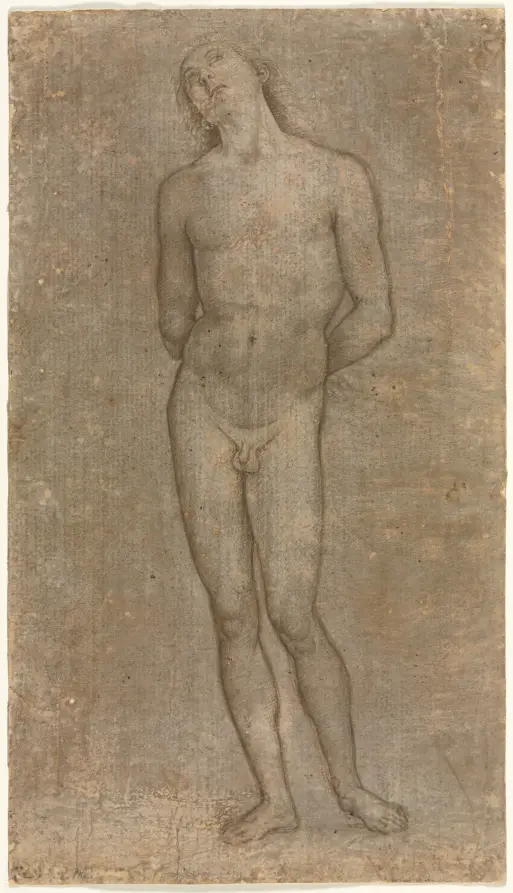
Saint Sebastian
Practical reuse

Use this artwork.

Verified CC0

This record carries an explicit open-use marker in the source metadata. Download the publication copy or follow the museum record for its master image.

Download publication WebP Open museum master ↗
Rights signal
CC0
Publication file
513 × 893 px · WebP
Suggested credit
Saint Sebastian by Perugino (Italian, c. 1450/55–1523) (c. 1493). Dudley P. Allen Fund Rights: CC0. https://clevelandart.org/art/1958.411

Vault de Lupin makes the source signal legible; it does not provide legal advice or replace the institution’s current rights statement.

From the museum record

The Florentine painter Perugino made drawings to record figural types and poses that could be repeated throughout his finished paintings. He used the elegant, graceful figure seen here, with its soft athletic body and upwardly turned gaze, in at least two paintings of the 3rd-century martyr Saint Sebastian (the related paintings are now in the collection of the Galleria degli Uffizi, and the Louvre). Sebastian was shot with arrows after being exposed as a Christian convert; he was particularly revered during the Renaissance as a protector against illness such as the plague. Portrayal of the saint required Perugino to express his knowledge of human anatomy, while evoking the gentle s-curve associated with classical sculpture. Drawn with metalpoint, a typical drawing medium in the 1400s, the reinforced lines along the contour of the figure indicate that it was probably used by the artist or by one of his many studio assistants to transfer the design to another sheet.

Lupin’s visual index

A pale, nude male figure stands in a contrapposto pose against a textured, earthy background.

Machine-assisted description · useful for discovery, not scholarship.
Continue looking

Nearby in the vault.

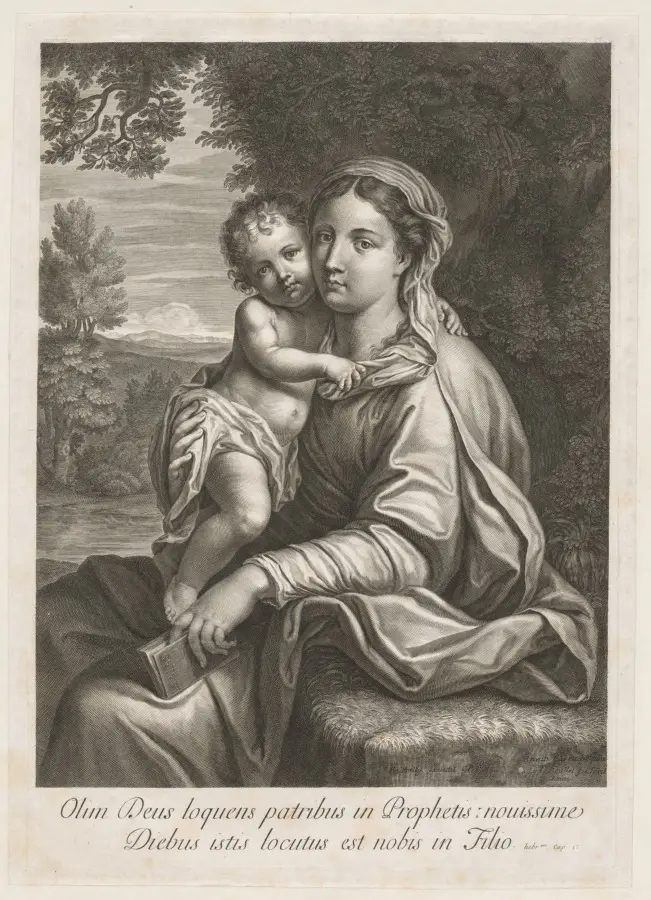
Saint Sebastian

Saint Sebastian · Perugino (Italian, c. 1450/55–1523)

Your private shortlist

Saved works 0

Stored only in this browser. No account, tracking, or upload.

No works saved yet.

Use “Save work” on any catalogue card or artwork record to build a working collection.