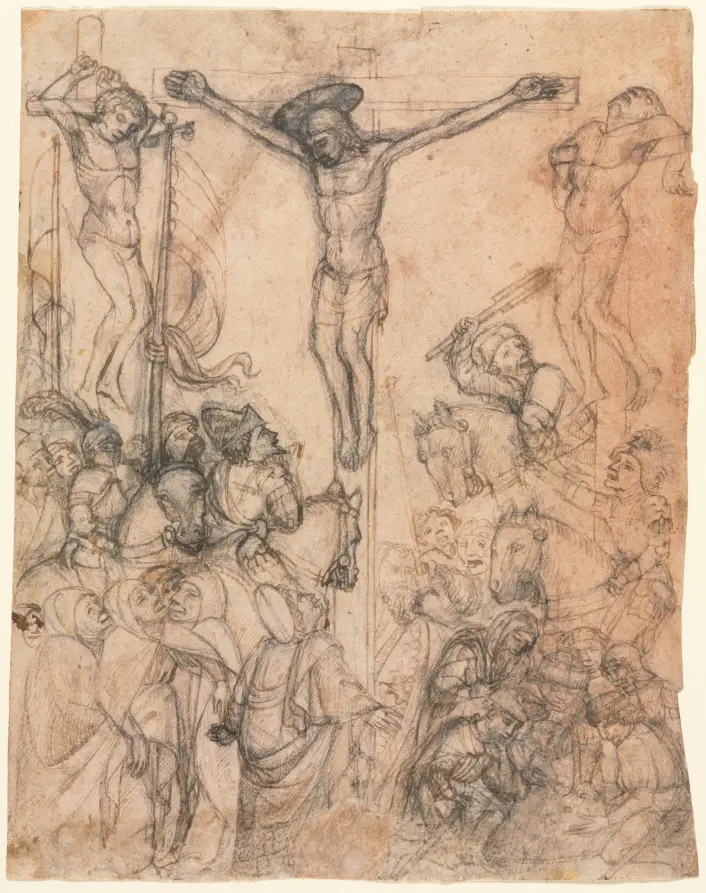
Crucifixion with the Two Thieves
Practical reuse

Use this artwork.

Verified CC0

This record carries an explicit open-use marker in the source metadata. Download the publication copy or follow the museum record for its master image.

Download publication WebP Open museum master ↗
Rights signal
CC0
Publication file
706 × 893 px · WebP
Suggested credit
Crucifixion with the Two Thieves (1450–1500). Delia E. and L. E. Holden Funds and John L. Severance Fund Rights: CC0. https://clevelandart.org/art/1956.43

Vault de Lupin makes the source signal legible; it does not provide legal advice or replace the institution’s current rights statement.

From the museum record

To make this drawing—which could be a ricordi (a visual record of a painting)—the artist first sketched part of the composition with charcoal before completing it with pen and ink. Charcoal was not regularly used as a drawing medium until the second half of the 1400s. Even then, it was usually a secondary medium, as seen here, meant to sketch or outline figures to be completed in other media. Charcoal and black chalk became more popular with later generations of artists, including Michelangelo, who found the supple qualities of the media ideal for rendering the human figure.

Lupin’s visual index

a detailed black and brown drawing depicts the crucifixion of jesus christ surrounded by mourners and onlookers.

Machine-assisted description · useful for discovery, not scholarship.
Continue looking

Nearby in the vault.

Crucifixion with the Two Thieves

Crucifixion with the Two Thieves

Your private shortlist

Saved works 0

Stored only in this browser. No account, tracking, or upload.

No works saved yet.

Use “Save work” on any catalogue card or artwork record to build a working collection.