Vol. I · The open image paperWinnipeg · Musée sans mursRecovered · Remembered · Returned
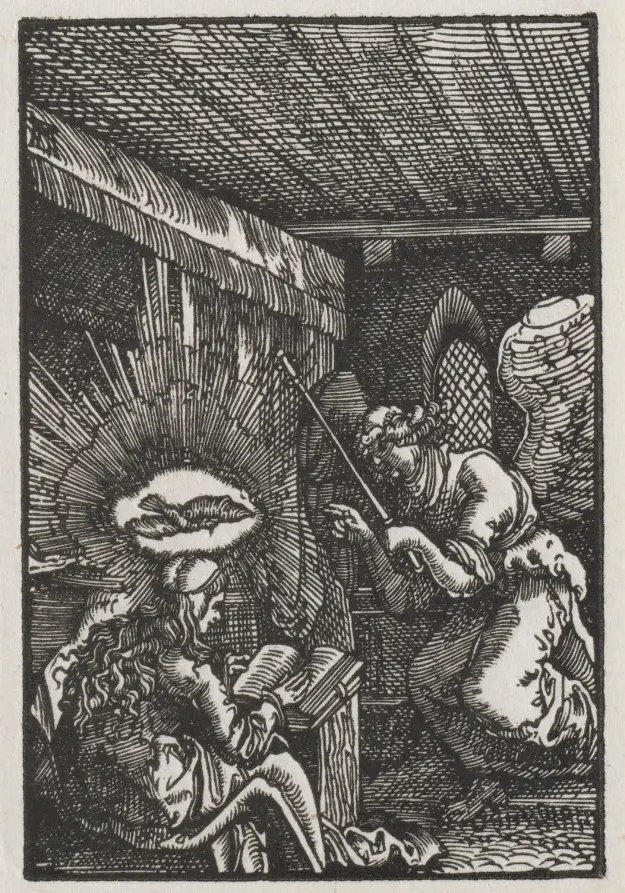
Cleveland Museum of Art129955portraitAlbrecht Altdorfer (German, c. 1480–1538)c. 1513CC0cma sacred-art portraits design-assets ink-paper-impressions objects-with-gravity sacred art design assets ink paper impressions objects with gravity woodcut engraving angel artist sketching light inspiration religious medieval dark monochrome texture detail portrait study 15th century the fall and redemption man annunciationAlbrecht Altdorfer (German, c. 1480–1538) c. 1513 Germany woodcut Print European ReligiousSacred & Devotional Faces in Time The Maker’s Cabinet Ink, Paper & Impressions Objects with Gravity
Practical reuse
Use this artwork.
Verified CC0
This record carries an explicit CC0 marker in the source metadata. Download the publication copy or follow the source record for its master image.
The Fall and Redemption of Man: The Annunciation by Albrecht Altdorfer (German, c. 1480–1538) (c. 1513). John L. Severance Fund Rights: CC0. https://clevelandart.org/art/1952.38.d
Vault de Lupin makes the source signal legible; it does not provide legal advice or replace the institution’s current rights statement.
From the museum record
These eight woodcuts come from a series of forty which illustrate the story of Christian redemption from original sin to the Last Judgement. Probably to maximize printing efficiency and quality, eight woodblocks were printed on each of five sheets of paper, but the subjects are not in the correct chronological order. Prior to sale, the sheets were cut into eight pieces. The sheets in the museum's set were only cut in half, preserving four prints per page. The numbers after the titles of the individual images indicate each scene's place within the narrative. By 1513, Altdorfer had already executed a number of small, finely detailed engravings. Because it is difficult to achieve the same degree of precision using woodcut, The Fall and Redemption of Man is a technical tour de force. Probably inspired by Albrecht Dürer's Small Passion (1511)-but almost double the size-the only contemporaneous comparable set of fine miniature woodcuts, Dance of Death, was designed by Hans Holbein in about 1526 (on view nearby).
Lupin’s visual index
A detailed woodcut depicts an angel illuminating a young man engrossed in sketching at a wooden table.
Machine-assisted description · useful for discovery, not scholarship.