Vol. I · The open image paperWinnipeg · Musée sans mursRecovered · Remembered · Returned
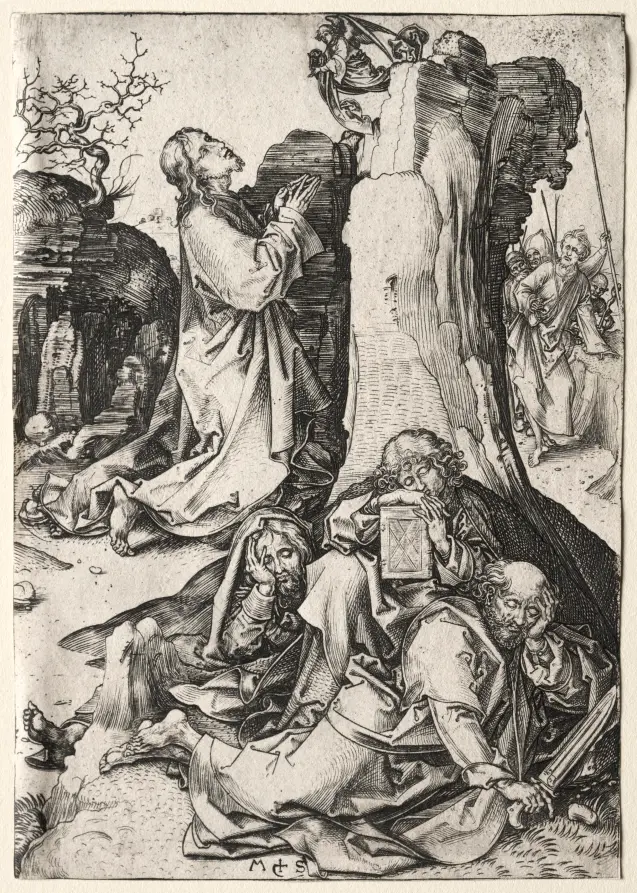
Cleveland Museum of Art104613portraitMartin Schongauer (German, c. 1450–1491)c. 1480CC0cma sacred-art symbols-patterns portraits landscapes design-assets ink-paper-impressions objects-with-gravity sacred art symbols patterns design assets ink paper impressions objects with gravity engraving religious christ prayer medieval german woodcut monochrome sad serious old age sketch dark texture detail symbolism the passion agony gardenMartin Schongauer (German, c. 1450–1491) c. 1480 Germany engraving Print European ReligiousSacred & Devotional Symbols & Ornament Faces in Time Horizons & Places The Maker’s Cabinet Ink, Paper & Impressions Objects with Gravity
Practical reuse
Use this artwork.
Verified CC0
This record carries an explicit CC0 marker in the source metadata. Download the publication copy or follow the source record for its master image.
The Passion: The Agony in the Garden by Martin Schongauer (German, c. 1450–1491) (c. 1480). Gift of The Print Club of Cleveland Rights: CC0. https://clevelandart.org/art/1922.91
Vault de Lupin makes the source signal legible; it does not provide legal advice or replace the institution’s current rights statement.
From the museum record
Martin Schongauer's series of the Passion of Christ was his largest set of engravings, made around 1480, and extensively copied across Europe. It consists of twelve prints detailing the suffering of Christ in the last days of his life. Schongauer's version focuses on crowded scenes, grotesque physiognomies of Christ's tormentors, and great pathos in the compositions. Here, Jesus kneels in prayer in the Garden of Olives and looks up at a hovering angels. The apostles Peter, James, and John are sleeping in the foreground. In the background, Judas holds the bag of money received in exchange for his betrayal as he leads Roman soldiers towards Christ.
Lupin’s visual index
A detailed engraving depicts Christ kneeling in prayer amidst a group of aged figures, symbolizing humility and suffering.
Machine-assisted description · useful for discovery, not scholarship.