Vol. I · The open image paperWinnipeg · Musée sans mursRecovered · Remembered · Returned
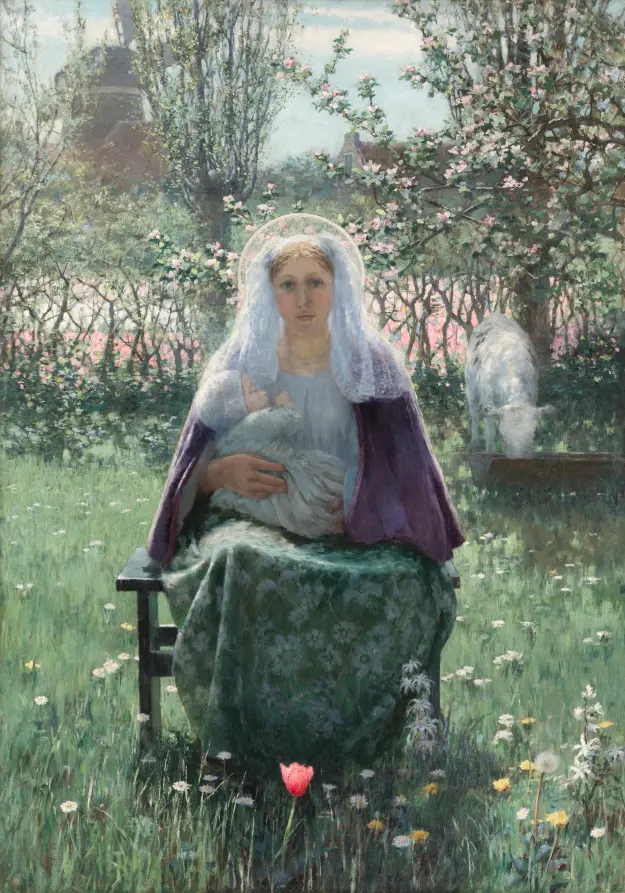
Cleveland Museum of Art95288portraitGeorge Hitchcock (American, 1850–1913)1892CC0cma sacred-art portraits landscapes flora-fauna sacred art flora fauna virgin mary jesus child medieval religious art portrait oil painting pastoral rose flowers landscape serene peaceful muted colors 19th century romanticism still life mother and child the blessed motherGeorge Hitchcock (American, 1850–1913) 1892 America oil on canvas Painting American ReligiousSacred & Devotional Faces in Time Horizons & Places The Living World
Practical reuse
Use this artwork.
Verified CC0
This record carries an explicit open-use marker in the source metadata. Download the publication copy or follow the museum record for its master image.
The Blessed Mother by George Hitchcock (American, 1850–1913) (1892). Gift of Mr. and Mrs. J. H. Wade Rights: CC0. https://clevelandart.org/art/1916.1057
Vault de Lupin makes the source signal legible; it does not provide legal advice or replace the institution’s current rights statement.
From the museum record
George Hitchcock decided to study art in Paris after practicing law for five years. He eventually settled in Holland and painted this Dutch peasant mother holding her baby and posing formally in a garden. Hitchcock was a visionary painter fascinated by the power of faith. But, like with many of his paintings, both the title and the scene here remain ambiguous, being neither clearly religious nor clearly secular. Early critics praised the work for its technical sophistication and representation of maternal tenderness, but they questioned its religious merit. Other reviewers, however, recognized religious symbolism throughout the painting. The mother's lacy headdress can represent a halo. The apple tree suggests the lost Eden, recovered through the birth of the child. The young bullock hints to the future sacrifice of Christ, and the prominent red tulip at the feet of the figures symbolizes the cup of sorrow. This painting's religious ambiguity exemplifies the 19th-century struggle to bring faith to terms with technical, philosophical, and scientific advances, namely Darwinism. Left to search for meaning in life and a spiritual identity, many artists, like Hitchcock, looked to women and nature for a link to the divine.
Lupin’s visual index
A serene depiction of the Virgin Mary seated in a meadow, holding the infant Jesus amidst blossoming roses and a distant windmill.
Machine-assisted description · useful for discovery, not scholarship.
.webp)