Vol. I · The open image paperWinnipeg · Musée sans mursRecovered · Remembered · Returned
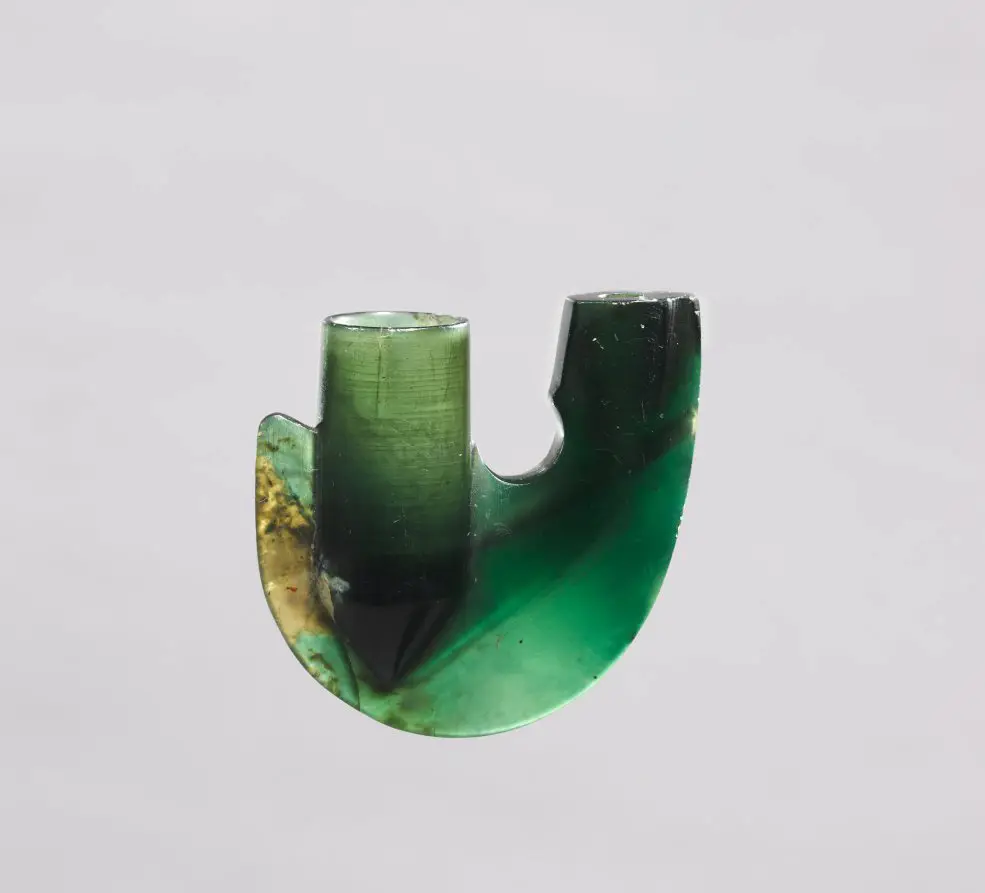
Cleveland Museum of Art170246squarepossibly 1800sCC0cma african-global-heritage mythology african global heritage maori art greenstone pendant nz art stone carving greenstone jade pacific art tribal art green teal dark green ancient prehistoric carving culture artifact museum pipe bowlpossibly 1800s Africa, Southern Africa, South Africa, Southern Nguni-style maker Nephrite and metal Tools and Equipment African MythologicalAfrican & Global Heritage Myth & Metamorphosis
Practical reuse
Use this artwork.
Verified CC0
This record carries an explicit open-use marker in the source metadata. Download the publication copy or follow the museum record for its master image.
Pipe Bowl (possibly 1800s). Purchase from the J. H. Wade Fund Rights: CC0. https://clevelandart.org/art/2012.42
Vault de Lupin makes the source signal legible; it does not provide legal advice or replace the institution’s current rights statement.
From the museum record
Carved from a deep green, translucent stone with a highly polished surface, this exquisite example of an extremely rare type of pipe bowl originates from the Eastern Cape Province in South Africa. Like the few other known examples, this pipe bowl would have been complemented by a stem, now lost, made from wood or reed or another less durable material. It is believed that such nephrite pipe bowls were copied from stone examples introduced by 17th-century Dutch settlers in the Cape region. In southern Africa, smoking tobacco and taking snuff were and still are enjoyed as activities that establish or solidify harmonious social relationships. In addition to their practical function as smoking devices, pipes of unusual and therefore costly materials and in fancy and refined shapes and forms, like this example, served as markers of rank and status and indicated prestige and socioeconomic prominence.
Lupin’s visual index
A polished greenstone pendant, shaped like a stylized bird, displays deep green and teal hues.
Machine-assisted description · useful for discovery, not scholarship.
.webp)