Vol. I · The open image paperWinnipeg · Musée sans mursRecovered · Remembered · Returned
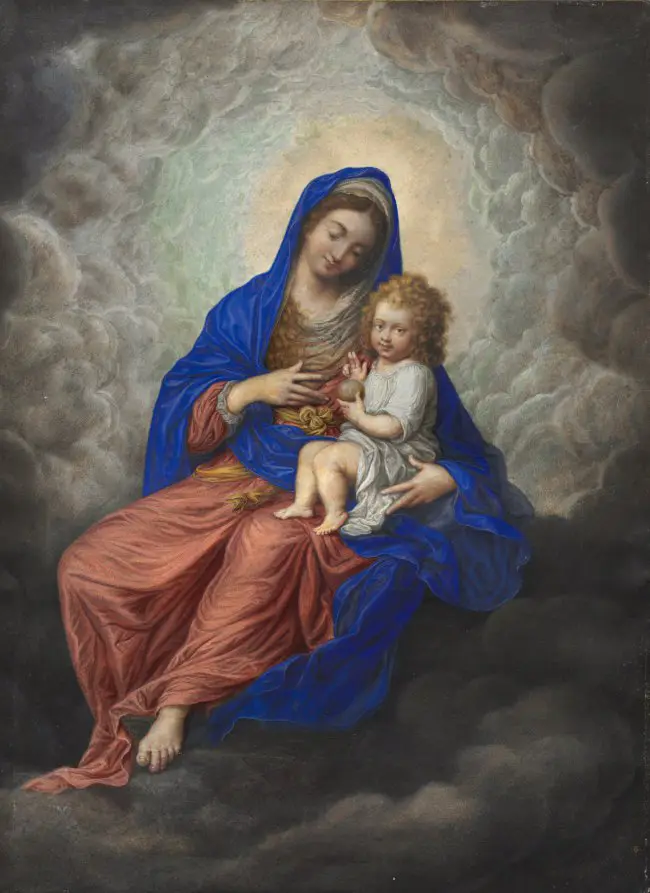
Cleveland Museum of Art169330portraitIsaac Oliver (French, c. 1565–1617)c. 1605–1617CC0cma sacred-art portraits ink-paper-impressions objects-with-gravity sacred art ink paper impressions objects with gravity virgin mary jesus child madonna renaissance oil painting religious art italian art clouds blue red gold serene graceful 16th century and gloryIsaac Oliver (French, c. 1565–1617) c. 1605–1617 England, 17th century gouache and watercolor, heightened with gum arabic, with shell gold framing lines, on vellum, mounted on paper, vellum, and wood Portrait Miniature European ReligiousSacred & Devotional Faces in Time Ink, Paper & Impressions Objects with Gravity
Practical reuse
Use this artwork.
Verified CC0
This record carries an explicit open-use marker in the source metadata. Download the publication copy or follow the museum record for its master image.
Madonna and Child in Glory by Isaac Oliver (French, c. 1565–1617) (c. 1605–1617). Leonard C. Hanna Jr. Fund Rights: CC0. https://clevelandart.org/art/2011.2
Vault de Lupin makes the source signal legible; it does not provide legal advice or replace the institution’s current rights statement.
From the museum record
It is difficult to overstate the singularity of this work in 17th-century England. While the image has visual sources in works by Rubens and Federico Barocci, surely known to the cosmopolitan artist (who travelled to Italy, unusually for English artists at this moment), the object is iconographically unique. Oliver places a tender Virgin and Child (itself more closely linked to Catholic instead of Protestant imagery), in a heavenly, visionary setting, and incorporates the medieval iconography of the lactating Virgin with the Salvator Mundi, early Netherlandish in origin, but more commonly an Italian typology by the early seventeenth century.
Lupin’s visual index
The Virgin Mary sits serenely, nursing the infant Jesus amidst a dramatic, cloudy sky.
Machine-assisted description · useful for discovery, not scholarship.
.webp)