Vol. I · The open image paperWinnipeg · Musée sans mursRecovered · Remembered · Returned
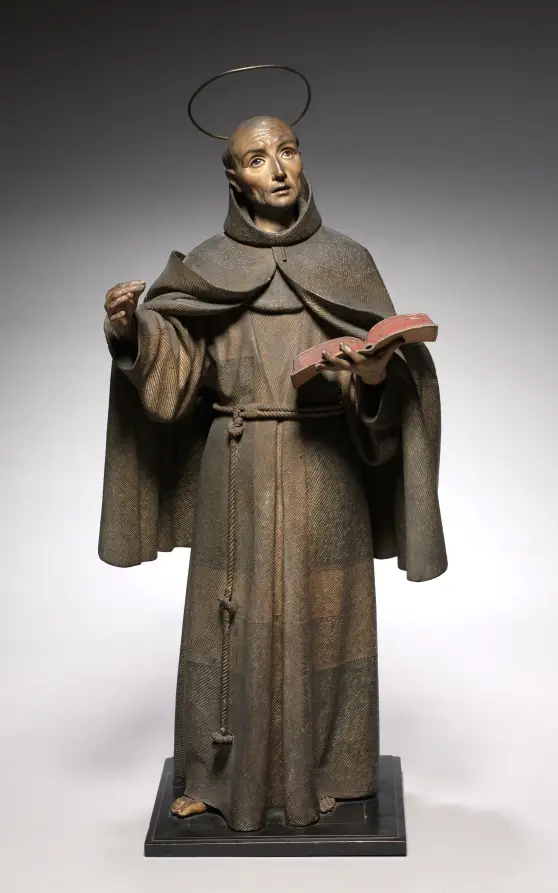
Cleveland Museum of Art168194portraitPedro de Mena (Spanish, 1628–1688)c. 1663–70CC0cma sacred-art portraits flora-fauna objects-with-gravity sacred art flora fauna objects with gravity saint franciscan monk bronze statue religious meditation brown dark renaissance portrait religious art catholic medieval text scripture peter alcántaraPedro de Mena (Spanish, 1628–1688) c. 1663–70 Spain painted wood, with ivory and glass Sculpture European ReligiousSacred & Devotional Faces in Time The Living World Objects with Gravity
Practical reuse
Use this artwork.
Verified CC0
This record carries an explicit open-use marker in the source metadata. Download the publication copy or follow the museum record for its master image.
Saint Peter of Alcántara by Pedro de Mena (Spanish, 1628–1688) (c. 1663–70). Leonard C. Hanna Jr. Fund Rights: CC0. https://clevelandart.org/art/2009.81
Vault de Lupin makes the source signal legible; it does not provide legal advice or replace the institution’s current rights statement.
From the museum record
Painted wood sculpture from Spain in the 1600s involved a team of artisans working under a lead sculptor. The sculptor first carved numerous pieces of wood in complex forms. So the paint would stick properly, these fragments were delicately covered in gesso (a combination of white chalk and glue made from animal collagen), preserving the subtle woodcarving underneath. The rough surface of the saint's face—reflecting his age and hardships—came from texturing the gesso with a brush. The glass eyes, probably imported from Venice, were inserted from behind the face before the wood pieces were attached. Finally, the eyelashes were added for a further touch of realism. A painter created the appearance of coarse sackcloth in a distinctive style, with yellow strokes rising off the surface. Smoother brushstrokes form the flesh tones, even revealing the saint's five-o'clock shadow. Unlike other kinds of painting, sculpture from southern Spain at this time was usually not covered in varnish; sculptors prized the unvarnished paint for its realistic effect, although it makes the surface exceptionally delicate and susceptible to dust and dirt, which more easily sticks to the surface.
Lupin’s visual index
A bronze statue depicts a Franciscan monk holding an open book, radiating serenity.
Machine-assisted description · useful for discovery, not scholarship.
.webp)