Vol. I · The open image paperWinnipeg · Musée sans mursRecovered · Remembered · Returned
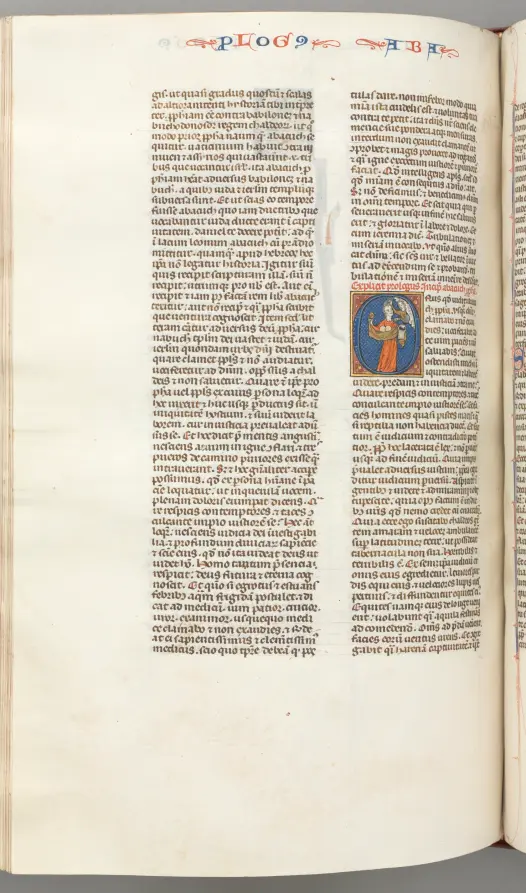
Cleveland Museum of Art166406portraitc. 1275–1300CC0cma sacred-art portraits ink-paper-impressions sacred art ink paper impressions medieval manuscript latin gothic script illumination text vellum handwritten old antique page scripture religious monastic dark brown gold fol 361v habbakuk historiated initial holding basket and two stones seized the hairc. 1275–1300 Southern France, Toulouse(?), 13th century ink, tempera, and gold on vellum Bound VolumeSacred & Devotional Faces in Time Ink, Paper & Impressions
Practical reuse
Use this artwork.
Verified CC0
This record carries an explicit open-use marker in the source metadata. Download the publication copy or follow the museum record for its master image.
Fol. 361v, Habbakuk, historiated initial O, Habbakuk holding a basket and two stones, seized by the hair by an angel (c. 1275–1300). John L. Severance Fund Rights: CC0. https://clevelandart.org/art/2008.2.361.b
Vault de Lupin makes the source signal legible; it does not provide legal advice or replace the institution’s current rights statement.
From the museum record
Biblical manuscripts were highly prized and important possessions of churches, monasteries, cathedral schools, and universities throughout medieval Europe. The biblical texts were known as the vulgate, the translations made by Saint Jerome in the fourth century from Hebrew and Greek into Latin, which became the definitive and official Latin version of the Roman Church. In the 13th century, the bible was, for the first time, produced as a single volume with an officially sanctioned sequence to its books and chapters as illustrated by this example. The very extensive decoration of this bible is arranged hierarchically to indicate the relative importance of the various texts so that full or almost full-page initials mark the openings of the first prologue, Genesis, and the first Gospel; historiated initials mark the beginning of each book and illuminated initials mark the Prologues.
Lupin’s visual index
A close-up showcases a page from an illuminated medieval manuscript filled with dense, handwritten Latin text and elaborate gothic script.
Machine-assisted description · useful for discovery, not scholarship.
.webp)