Vol. I · The open image paperWinnipeg · Musée sans mursRecovered · Remembered · Returned
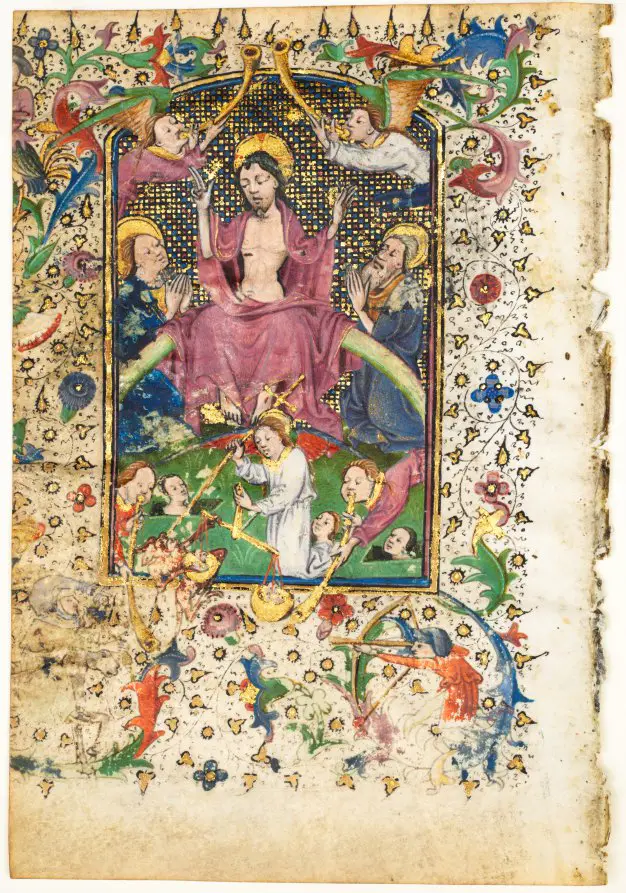
Cleveland Museum of Art160821portraitMaster of Guillebert de Mets (Flemish)1430sCC0cma sacred-art symbols-patterns portraits ink-paper-impressions sacred art symbols patterns ink paper impressions medieval illuminated manuscript christian art christ angels saints gothic gold leaf vibrant colors floral border religious art manuscript illumination 14th century renaissance detailed ornate religious medieval art leaf book hours the last judgmentMaster of Guillebert de Mets (Flemish) 1430s Flanders, Ghent (?), 15th century ink, tempera and gold on vellum Manuscript European ReligiousSacred & Devotional Symbols & Ornament Faces in Time Ink, Paper & Impressions
Practical reuse
Use this artwork.
Verified CC0
This record carries an explicit open-use marker in the source metadata. Download the publication copy or follow the museum record for its master image.
Leaf from a Book of Hours: The Last Judgment by Master of Guillebert de Mets (Flemish) (1430s). The Jeanne Miles Blackburn Collection Rights: CC0. https://clevelandart.org/art/1999.130
Vault de Lupin makes the source signal legible; it does not provide legal advice or replace the institution’s current rights statement.
From the museum record
The Master of Guillebert de Mets is named after the scribe who records his name in an illuminated copy of the Decameron , made for Duke Philip the Good of Burgundy, and for which he contributed many of its miniatures. He was active from about 1410 to 1445. So far there is no proof that allows us to follow his career or to know precisely where he worked. Calendars in other manuscripts with which he is associated suggest his shop may have been in Tournai, Liège, Bruges, and more credibly, Ghent. His commissions may have been linked to the itinerant Burgundian court, though no original provenance survives for any of his manuscripts. The Master of Guillebert de Mets painted in an easily recognizable style. His figures have prominent heads with well-delineated eyes and small mouths, slender torsos with thin, spindly legs, and long, finely worked fingers. Many of his miniatures, such as the Crucifixion and the Last Judgment here, show that he often favored mosaic backgrounds of delicately worked checkered patterns.
Lupin’s visual index
a vibrant illuminated manuscript depicts christ enthroned, surrounded by angels and saints in a complex, ornate border.
Machine-assisted description · useful for discovery, not scholarship.
.webp)