Vol. I · The open image paperWinnipeg · Musée sans mursRecovered · Remembered · Returned
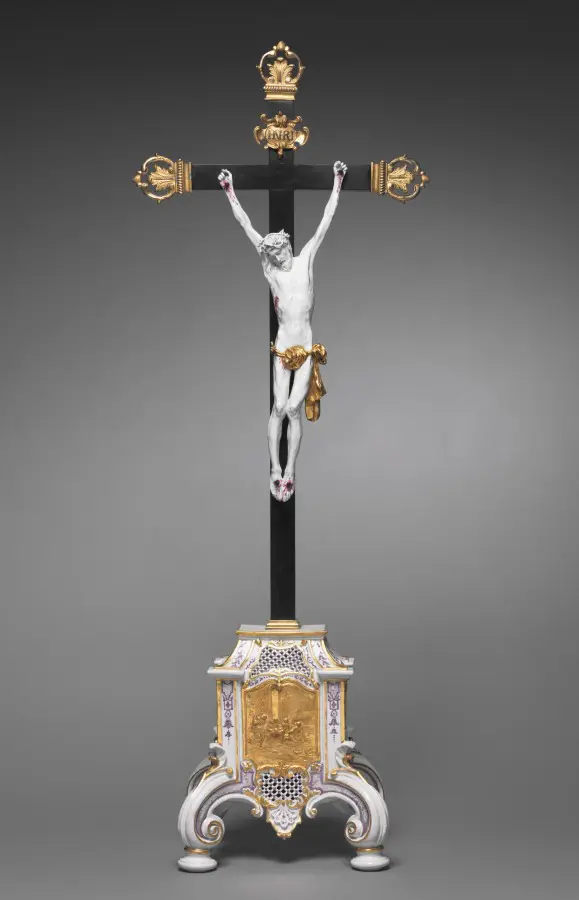
Cleveland Museum of Art159885portraitDu Paquier Porcelain Manufactory (Austrian, active 1719–1864)c. 1730CC0cma african-global-heritage sacred-art portraits flora-fauna objects-with-gravity african global heritage sacred art flora fauna objects with gravity crucifixion christ statue sculpture religious art baroque gold white cross pedestal ornate italian art renaissance religious catholic fine art detailed classical theDu Paquier Porcelain Manufactory (Austrian, active 1719–1864) c. 1730 Austria, Vienna porcelain, ebonized wood cross with gilt bronze mounts Ceramic European ReligiousAfrican & Global Heritage Sacred & Devotional Faces in Time The Living World Objects with Gravity
Practical reuse
Use this artwork.
Verified CC0
This record carries an explicit open-use marker in the source metadata. Download the publication copy or follow the museum record for its master image.
The Crucifixion by Du Paquier Porcelain Manufactory (Austrian, active 1719–1864) (c. 1730). Purchase from the J. H. Wade Fund Rights: CC0. https://clevelandart.org/art/1997.185
Vault de Lupin makes the source signal legible; it does not provide legal advice or replace the institution’s current rights statement.
From the museum record
The second oldest European porcelain factory after that at Meissen (in Germany) was set up in Vienna in 1716. During its early years, the Vienna factory was privately owned by a court official, Claudius Innocentius Du Paquier, and its early wares—made before 1744—carry his name. They are characterized by energetic shapes, strong colors, and the use of gold for surface decoration. This is the only Du Paquier crucifix known today. The figure of Christ closely resembles the work of Vienna's most famous sculptor, Georg Raphael Donner (1693–1741), and was probably created by one of his followers especially to be used on this crucifix. The anatomical accuracy and precise detail of the figure, along with the abundance of gold decoration, indicate that the piece was probably a special commission intended for a distinguished patron, possibly a member of the Hungarian Esterházy family.
Lupin’s visual index
A gleaming white statue of Christ on the cross stands atop a gilded and ornate pedestal.
Machine-assisted description · useful for discovery, not scholarship.
.webp)