Vol. I · The open image paperWinnipeg · Musée sans mursRecovered · Remembered · Returned
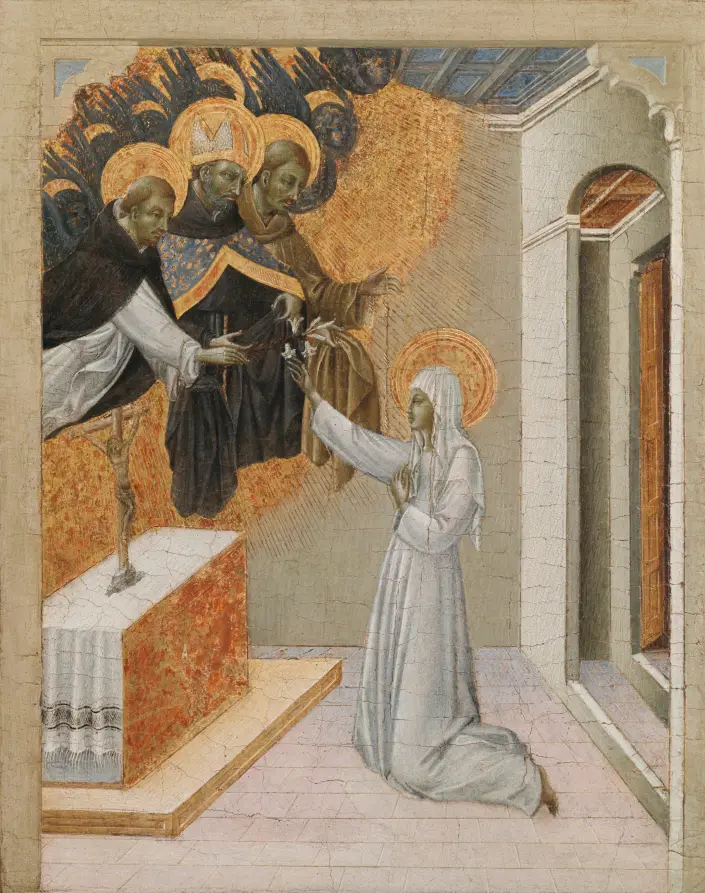
Cleveland Museum of Art142384portraitGiovanni di Paolo (Italian, c. 1403–1482)1460sCC0cma sacred-art flora-fauna objects-with-gravity sacred art flora fauna objects with gravity saint clare angels monks religious art fresco italian renaissance gold white prayer faith medieval grace blessing florale chiaroscuro fresco painting predella panel altarpiece catherine siena invested the dominican habitGiovanni di Paolo (Italian, c. 1403–1482) 1460s Italy, Siena tempera and gold on wood panel Painting European ReligiousSacred & Devotional The Living World Objects with Gravity
Practical reuse
Use this artwork.
Verified CC0
This record carries an explicit open-use marker in the source metadata. Download the publication copy or follow the museum record for its master image.
Predella Panel from an Altarpiece: St. Catherine of Siena Invested with the Dominican Habit by Giovanni di Paolo (Italian, c. 1403–1482) (1460s). Gift of the John Huntington Art and Polytechnic Trust Rights: CC0. https://clevelandart.org/art/1966.2
Vault de Lupin makes the source signal legible; it does not provide legal advice or replace the institution’s current rights statement.
From the museum record
Saint Catherine (1347–1380) was the daughter of a prosperous Sienese cloth dyer. At the age of six, she saw a vision of Christ and thereafter dedicated herself to chastity, penance, and good works. She became extremely popular in Siena when she selflessly cared for the sick and dying victims of the bubonic plague, known as the Black Death. These panels were once part of a predella (or pedestal) of a large altarpiece painted for the Hospital Church of Siena. The main scene of this altarpiece, showing the Presentation of Christ in the Temple (now preserved in Siena) was ordered by the Pork Butchers Guild (the Pizzicaiuoli) in 1447. The predella was added later when Catherine was canonized in 1461. In the first panel she kneels before an altar and reaches up to choose from the monastic garments offered by Saints Dominic, Augustine, and Francis, all founders of religious orders. Catherine takes the habit of Saint Dominic, which she wore as the founder of the Sisters of Penance. The second panel shows, at the right, Saint Catherine giving her cloak to a threadbare beggar. The beggar was really Christ in disguise, and at the left he returns the cloak to her. For this act of charity, the cloak perpetually protected its wearer from the cold.
Lupin’s visual index
A pale nun kneels before angels offering a flower, receiving a blessing from monks in a religious setting.
Machine-assisted description · useful for discovery, not scholarship.
.webp)