Vol. I · The open image paperWinnipeg · Musée sans mursRecovered · Remembered · Returned
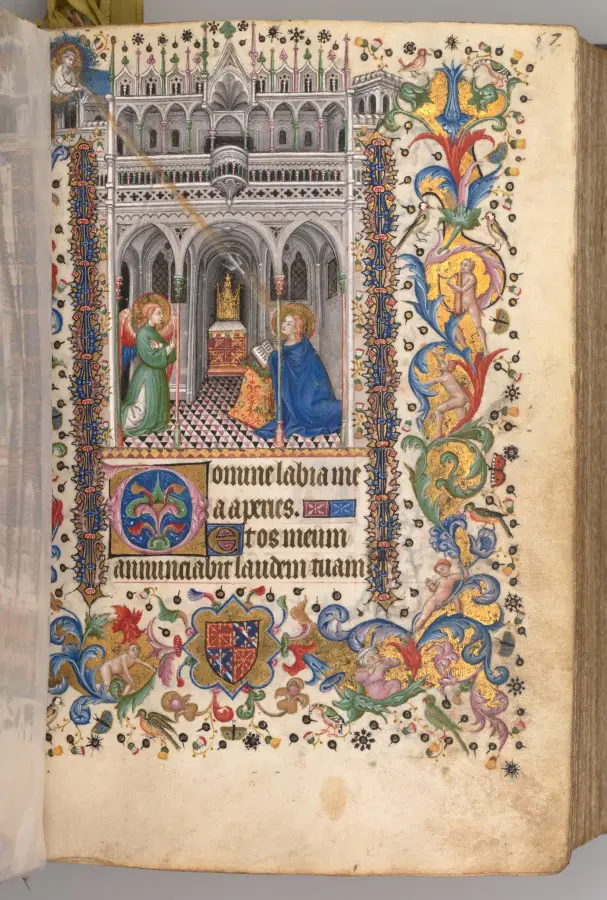
Cleveland Museum of Art140913portraitMaster of the Brussels Initials and Associates (French)c. 1405CC0cma portraits ink-paper-impressions ink paper impressions medieval illumination manuscript bible stained glass religious art color gold leaf heraldry figure architecture decorative vibrant detailed europe 14th century gothic page text hours charles the noble king navarre 1361 1425 fol 29r annunciation matinsMaster of the Brussels Initials and Associates (French) c. 1405 France, Paris ink, tempera, and gold on vellum Bound Volume EuropeanFaces in Time Ink, Paper & Impressions
Practical reuse
Use this artwork.
Verified CC0
This record carries an explicit CC0 marker in the source metadata. Download the publication copy or follow the source record for its master image.
Hours of Charles the Noble, King of Navarre (1361-1425): fol. 29r,The Annunciation (Matins) by Master of the Brussels Initials and Associates (French) (c. 1405). Mr. and Mrs. William H. Marlatt Fund Rights: CC0. https://clevelandart.org/art/1964.40.29.a
Vault de Lupin makes the source signal legible; it does not provide legal advice or replace the institution’s current rights statement.
From the museum record
This precious volume was obviously highly prized by its owner, the French-born King of Navarre, who had his coat of arms painted on no less than 20 folios. Rather than directly commissioning this manuscript from a specific workshop, it seems that Charles the Noble acquired his book of hours—perhaps made for the luxury market—while on a trip to Paris in 1404–5. A collaborative effort, six painting styles are seen within the pages of this codex, those of two Italians, two Frenchmen, and two Netherlanders. The painter who was responsible for the planning and decoration of the book, and who produced 17 of the large miniatures, was a Bolognese artist known as the Master of the Brussels Initials.
Lupin’s visual index
a vibrant medieval illuminated manuscript page depicts a kneeling figure within a richly decorated architectural setting.
Machine-assisted description · useful for discovery, not scholarship.