Vol. I · The open image paperWinnipeg · Musée sans mursRecovered · Remembered · Returned
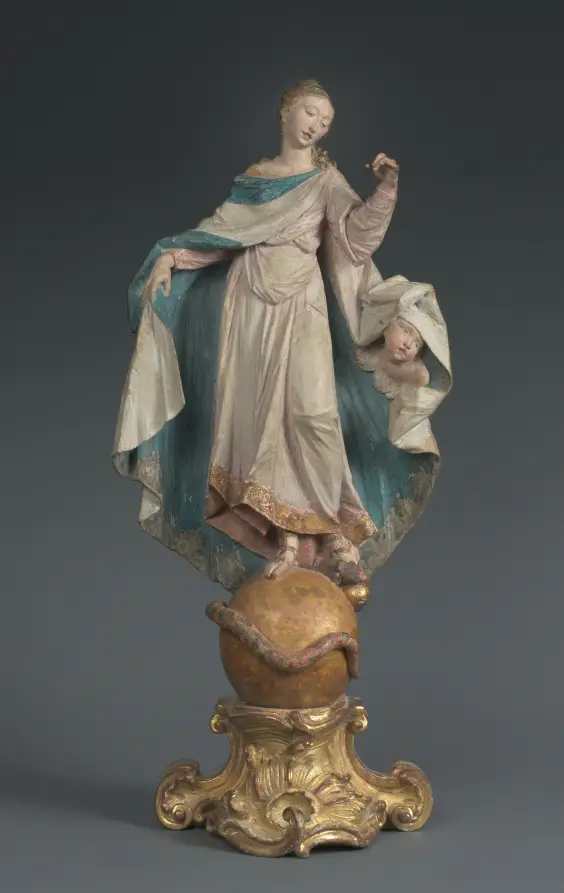
Cleveland Museum of Art139493portraitIgnaz Günther (German, 1725–1775)c. 1770CC0cma sacred-art portraits objects-with-gravity sacred art objects with gravity statue virgin mary jesus child religious art polychrome wood carving italian renaissance baroque gold blue white angel globe pedestal religious figurative the immaculate conceptionIgnaz Günther (German, 1725–1775) c. 1770 Germany, Munich, 18th century painted and gilded wood Sculpture European ReligiousSacred & Devotional Faces in Time Objects with Gravity
Practical reuse
Use this artwork.
Verified CC0
This record carries an explicit CC0 marker in the source metadata. Download the publication copy or follow the source record for its master image.
The Immaculate Conception by Ignaz Günther (German, 1725–1775) (c. 1770). Leonard C. Hanna Jr. Fund Rights: CC0. https://clevelandart.org/art/1963.294
Vault de Lupin makes the source signal legible; it does not provide legal advice or replace the institution’s current rights statement.
From the museum record
The Christian doctrine of the Immaculate Conception maintains that the Virgin Mary was conceived free from sin, ready to be the pure vessel for Christ’s birth. Depicting such an abstract idea required specific imagery. The moon beneath the Virgin’s feet, for example, comes from the New Testament vision of Saint John the Evangelist (Revelation 12:1) of “a woman clothed with the sun, with the moon under her feet,” while the serpent upon which she treads symbolizes Christ’s triumph over original sin. With his characteristically delicate modeling, elongated proportions, and soft coloring, Ignaz Günther created an archetypal image of innocence on the cusp of womanhood.
Lupin’s visual index
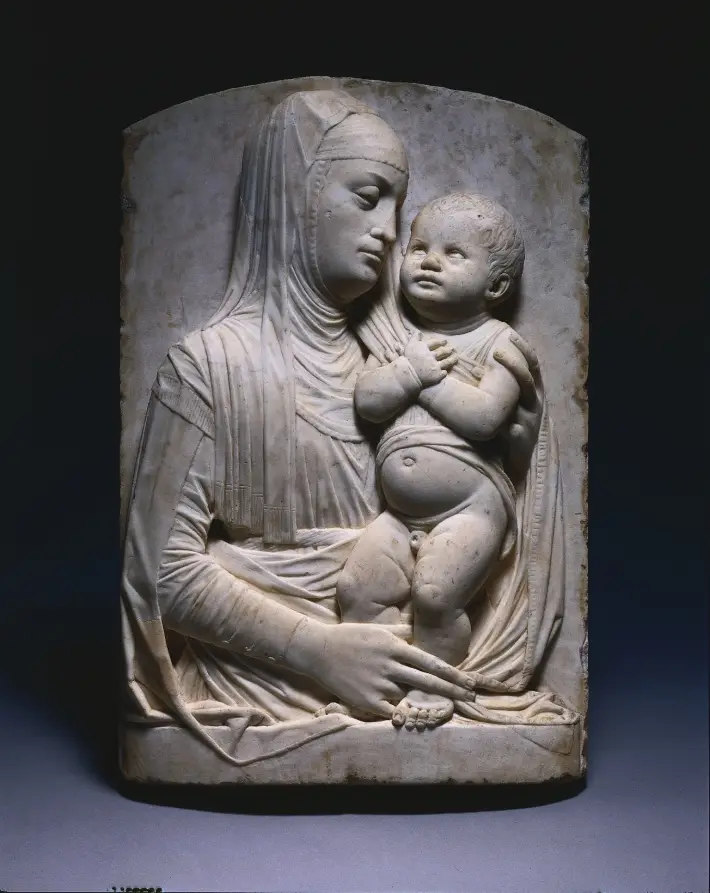
A polychrome wooden statue depicts the Virgin Mary holding the infant Jesus, set upon a globe-supported pedestal.
Machine-assisted description · useful for discovery, not scholarship.