Vol. I · The open image paperWinnipeg · Musée sans mursRecovered · Remembered · Returned
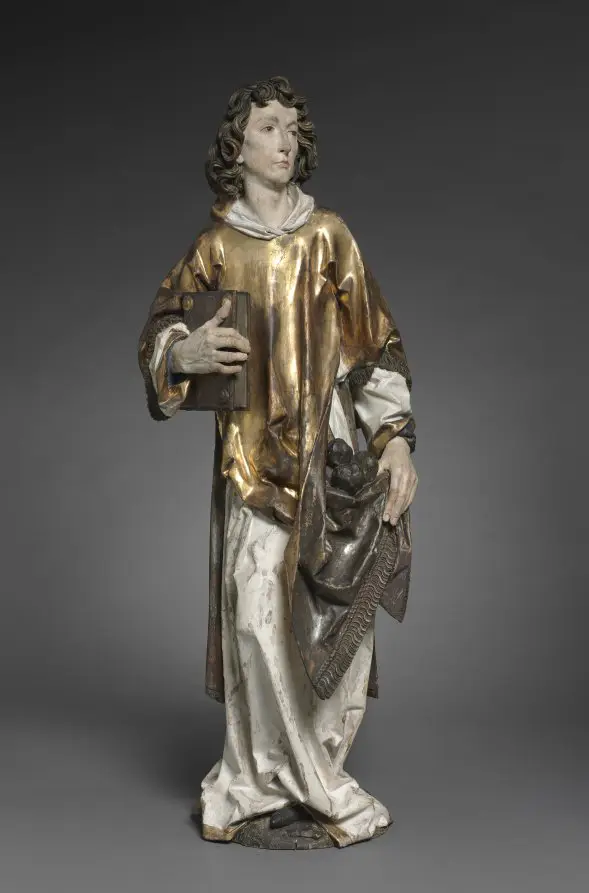
Cleveland Museum of Art135931portraitTilman Riemenschneider (German, active Würzburg, c. 1460–1531)1502–8CC0cma sacred-art portraits flora-fauna objects-with-gravity sacred art flora fauna objects with gravity saint benedict religious sculpture wood polychrome renaissance medieval catholic figure biblical monastic gold brown beige detail portrait religious art italian art stephenTilman Riemenschneider (German, active Würzburg, c. 1460–1531) 1502–8 Germany, Würzburg, 16th century lindenwood with polychromy and gilding Sculpture European ReligiousSacred & Devotional Faces in Time The Living World Objects with Gravity
Practical reuse
Use this artwork.
Verified CC0
This record carries an explicit open-use marker in the source metadata. Download the publication copy or follow the museum record for its master image.
Saint Stephen by Tilman Riemenschneider (German, active Würzburg, c. 1460–1531) (1502–8). Leonard C. Hanna Jr. Fund Rights: CC0. https://clevelandart.org/art/1959.43
Vault de Lupin makes the source signal legible; it does not provide legal advice or replace the institution’s current rights statement.
From the museum record
This sculpture, along with that of Saint Lawrence (1959.42) and two others in Germany, are believed to be the remaining fragments of a large altarpiece carved by Riemenschneider for the Dominican convent in Rothenburg in Franconia (demolished in 1813). Saints Stephen and Lawrence both wear the dalmatic to indicate their status as deacons in the early church. Each holds a symbol of his martyrdom; here, Saint Stephen cradles some stones to indicate his death by stoning. Art in Germany through the early 1500s remained firmly anchored in the late Gothic style with its associated interests in realism. Riemenschneider was one of the most prolific and versatile sculptors of this style, a recognized master in both stone and wood. His flourishing workshop employed as many as 40 apprentices in sculpting, woodcarving, and painting. His sculptures are noted for the dreamy, melancholy, and introspective quality in their expressions, as well as their remarkable attention to detail.
Lupin’s visual index
A polychrome wooden statue depicts Saint Benedict holding a book and a bag of beads, characteristic of 15th-century religious sculpture.
Machine-assisted description · useful for discovery, not scholarship.
.webp)