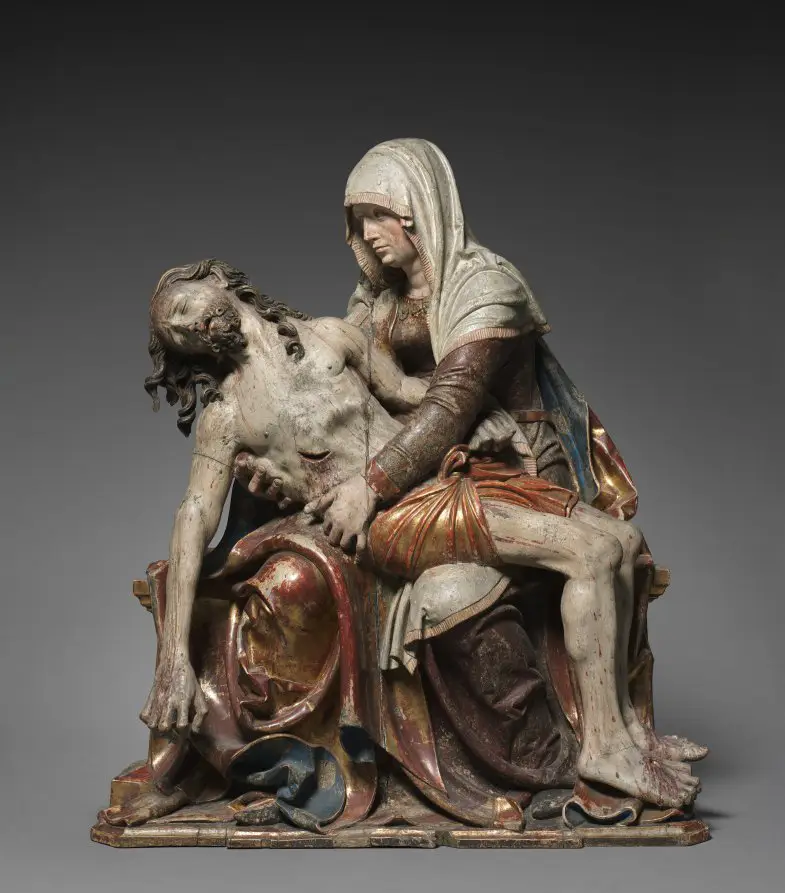
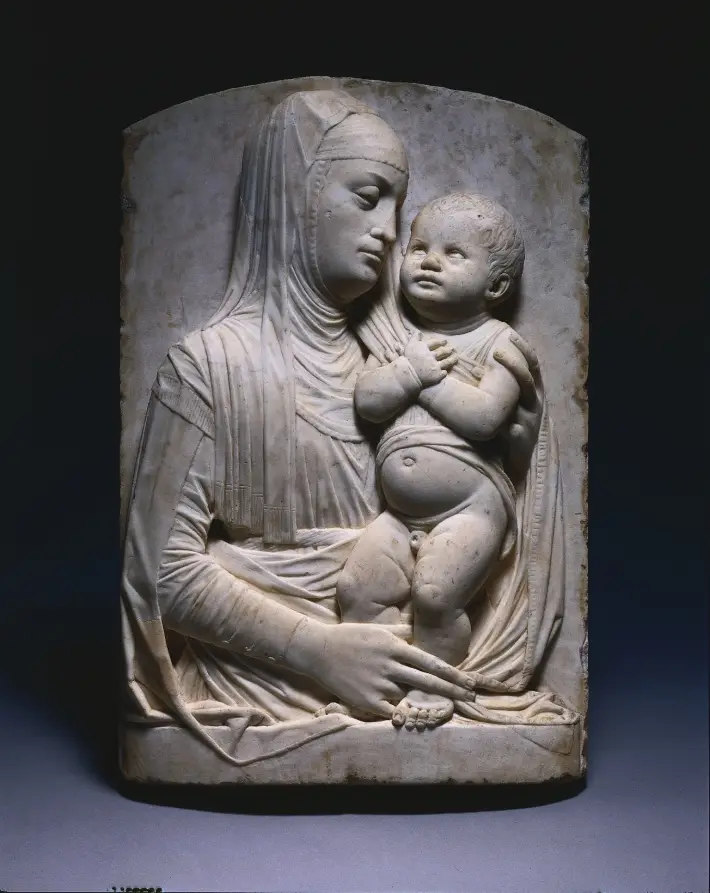
Vesperbild (Pietà)
Practical reuse

Use this artwork.

Verified CC0

This record carries an explicit open-use marker in the source metadata. Download the publication copy or follow the museum record for its master image.

Download publication WebP Open museum master ↗
Rights signal
CC0
Publication file
785 × 893 px · WebP
Suggested credit
Vesperbild (Pietà) by Master of Rabenden (German) (c. 1515–20). Purchase from the J. H. Wade Fund Rights: CC0. https://clevelandart.org/art/1938.294

Vault de Lupin makes the source signal legible; it does not provide legal advice or replace the institution’s current rights statement.

From the museum record

Depicting the Virgin cradling Christ’s dead body, works like this one were known in German as vesperbilds , owing to their incorporation into the liturgy of the evening prayer (vespers) on Good Friday. The word pietà —from the Latin pietas , meaning "piety" or "compassion"—was also used to describe such works. Like other devotional image types that emerged in southern Germany in the later medieval period, vesperbilds encouraged viewers to contemplate Christ’s suffering and empathize with the Virgin’s sorrows more directly and emotively than ever before. This anonymous German artist is named after one of his most important works, the high altar of the church of Rabenden in the Chiemgau, the foothills of the Alps. The sculpture was likely placed in a secondary chapel in a Bavarian church.

Lupin’s visual index

a polychrome wooden sculpture depicts the virgin mary mourning over the lifeless body of john the evangelist.

Machine-assisted description · useful for discovery, not scholarship.
Continue looking

Nearby in the vault.

Vesperbild (Pietà)

Vesperbild (Pietà) · Master of Rabenden (German)

Your private shortlist

Saved works 0

Stored only in this browser. No account, tracking, or upload.

No works saved yet.

Use “Save work” on any catalogue card or artwork record to build a working collection.