Vol. I · The open image paperWinnipeg · Musée sans mursRecovered · Remembered · Returned
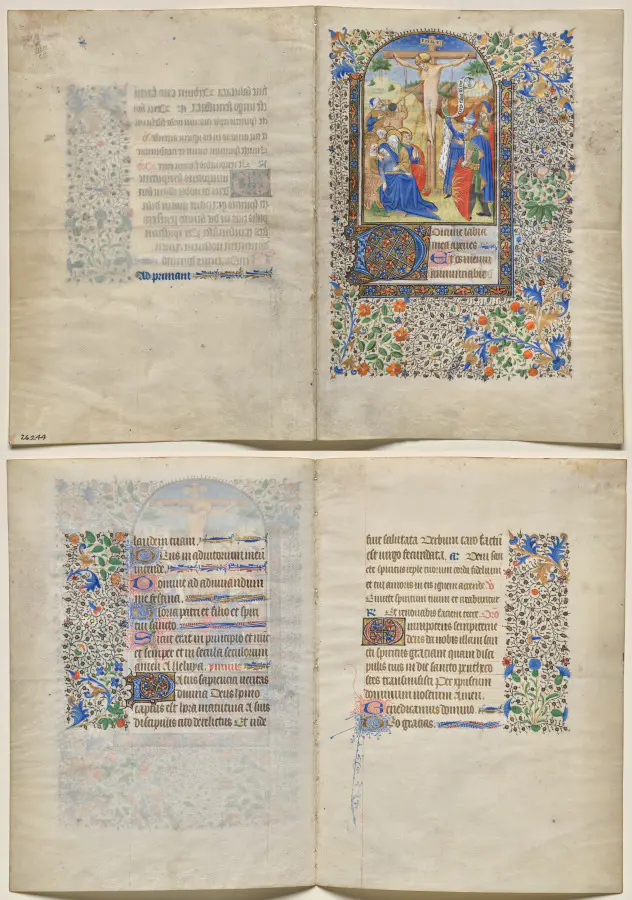
Cleveland Museum of Art108538portraitc. 1435CC0cma sacred-art portraits ink-paper-impressions sacred art ink paper impressions medieval manuscript illumination gothic book parchment vellum initials gold leaf color religious text page medieval art europe 14th century hand lettering decorative miniature bifolio hours the crucifixion recto versoc. 1435 France (Angers, Nantes, or Poitiers) ink, tempera, and gold on vellum ManuscriptSacred & Devotional Faces in Time Ink, Paper & Impressions
Practical reuse
Use this artwork.
Verified CC0
This record carries an explicit CC0 marker in the source metadata. Download the publication copy or follow the source record for its master image.
Bifolio from a Book of Hours: The Crucifixion (recto), Text (verso) (c. 1435). Purchase from the J. H. Wade Fund Rights: CC0. https://clevelandart.org/art/1926.244
Vault de Lupin makes the source signal legible; it does not provide legal advice or replace the institution’s current rights statement.
From the museum record
In most books of hours, the Hours of the Cross and the Hours of the Holy Spirit are much shorter than the Hours of the Virgin. Like the Hours of the Virgin, each hour consists of specific hymns, devotional poems, and prayers to be said throughout the day. Accompanying illustrations are either events surrounding the Crucifixion or the Pentecost, the descent of the Holy Spirit on the disciples of Jesus after his ascension to heaven. Traditionally, the Hours of the Cross begins with a scene of the Crucifixion of Christ. The illumination, or illustration, can help determine which series is indicated, as the Hours of the Cross and Holy Spirit begin with the same text. After 1400, such text no longer appeared solely in Latin but could be in French or Dutch, making it more accessible to laypeople.
Lupin’s visual index
An open medieval manuscript page displays ornate illuminated initials and richly decorated text within a parchment binding.
Machine-assisted description · useful for discovery, not scholarship.