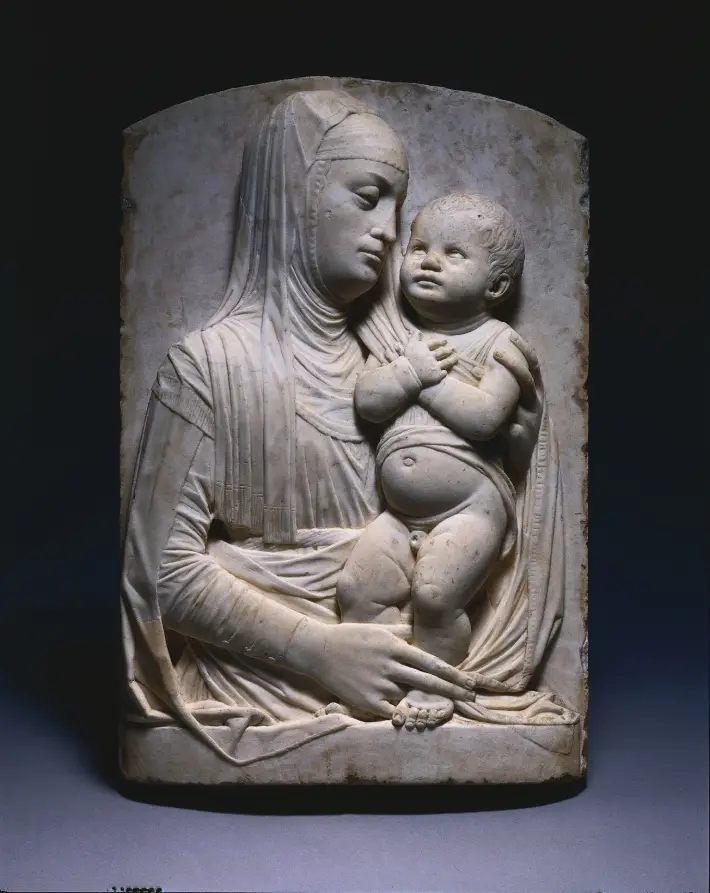
Pietà
Practical reuse

Use this artwork.

Verified CC0

This record carries an explicit open-use marker in the source metadata. Download the publication copy or follow the museum record for its master image.

Download publication WebP Open museum master ↗
Rights signal
CC0
Publication file
670 × 893 px · WebP
Suggested credit
Pietà (late 1500s). Gift of Philip R. McCurdy and Lucia McCurdy McBride Rights: CC0. https://clevelandart.org/art/1915.407

Vault de Lupin makes the source signal legible; it does not provide legal advice or replace the institution’s current rights statement.

From the museum record

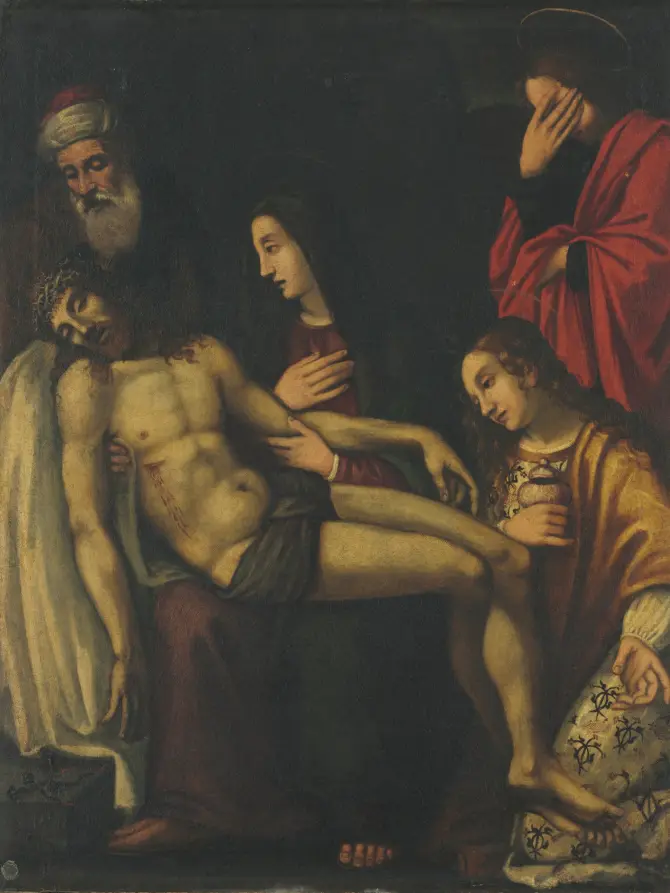
Originating in Germany in the 1300s, the intense moment of lamentation, often referred to as a pietà, has no origin in the Bible. Though it was more widespread in northern Europe, the poignant scene of Mary holding the body of her deceased son expanded into Italy as well. In this painting, Nicodemus supports Christ's upper body, Mary clasps her son's elbow as he lies across her lap, Mary Magdalene kneels at Christ's feet, and John the Apostle covers his face in grief behind her. The crown of thorns upon Christ's head and the blood still visible from his wounds recall the events of the Passion and highlight the sorrow of the Virgin.

Lupin’s visual index

A somber oil painting depicts the Virgin Mary and other mourners gathered around the lifeless body of Christ.

Machine-assisted description · useful for discovery, not scholarship.
Continue looking

Nearby in the vault.

Pietà

Pietà

Your private shortlist

Saved works 0

Stored only in this browser. No account, tracking, or upload.

No works saved yet.

Use “Save work” on any catalogue card or artwork record to build a working collection.