Vol. I · The open image paperWinnipeg · Musée sans mursRecovered · Remembered · Returned
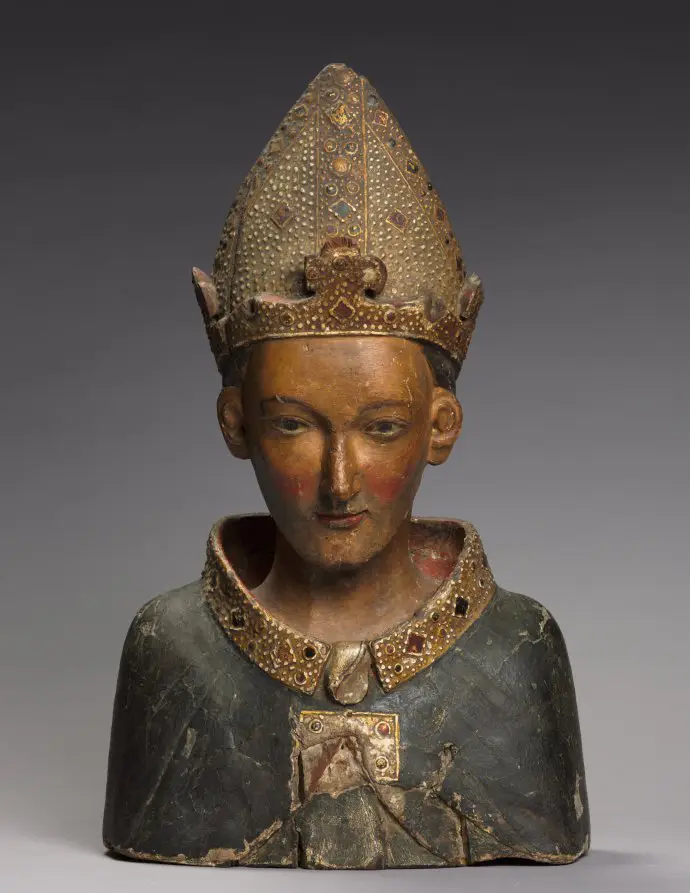
Cleveland Museum of Art169274portraitlate 1300sCC0cma portraits objects-with-gravity objects with gravity bishop portrait wooden sculpture religious art medieval 15th century renaissance portraiture religious figure mitre gold red brown dark wood detailed religious europe artisan historical religious iconography bust reliquary louis toulouselate 1300s Italy, Tuscany, Siena(?) wood (walnut) with polychromy, gesso and gilding Sculpture ReligiousFaces in Time Objects with Gravity
Practical reuse
Use this artwork.
Verified CC0
This record carries an explicit open-use marker in the source metadata. Download the publication copy or follow the museum record for its master image.
Bust Reliquary of St. Louis, Bishop of Toulouse (late 1300s). Gift of Albert van Stolk Rights: CC0. https://clevelandart.org/art/2011.153
Vault de Lupin makes the source signal legible; it does not provide legal advice or replace the institution’s current rights statement.
From the museum record
This reliquary bust was probably made to house a relic of Saint Louis, Bishop of Toulouse (1274–97), second son of Charles II of Anjou, King of Naples (1288–1309). Renowned for his works of charity, he was made bishop in 1297 and died shortly after at the age of 23. He was canonized in 1317, and his cult of veneration spread rapidly in Italy and Spain. In art, Louis is generally represented as a "boy" bishop without a beard and with youthful features. The relic (now lost) would have been enshrined within. On feast days the reliquary would have likely been carried in procession and otherwise placed in a church sanctuary or on a side altar for the veneration of the faithful. Relics were the physical remains of the saints, chiefly their bodies. The living venerated the relics of the saints in order to seek their patronage, which in turn provided a proximate link to the divine ruler. The power of the saints was therefore manifested by and through their relics, or objects that were owned or touched by them. Medieval pilgrims, in a world fraught with peril, sought close physical contact with relics, which protected both the spiritual and temporal welfare of laypeople and religious communities.
Lupin’s visual index
A weathered, painted wooden bust depicts a bishop wearing a richly decorated mitre and a dark, jewel-encrusted robe.
Machine-assisted description · useful for discovery, not scholarship.
.webp)