Vol. I · The open image paperWinnipeg · Musée sans mursRecovered · Remembered · Returned
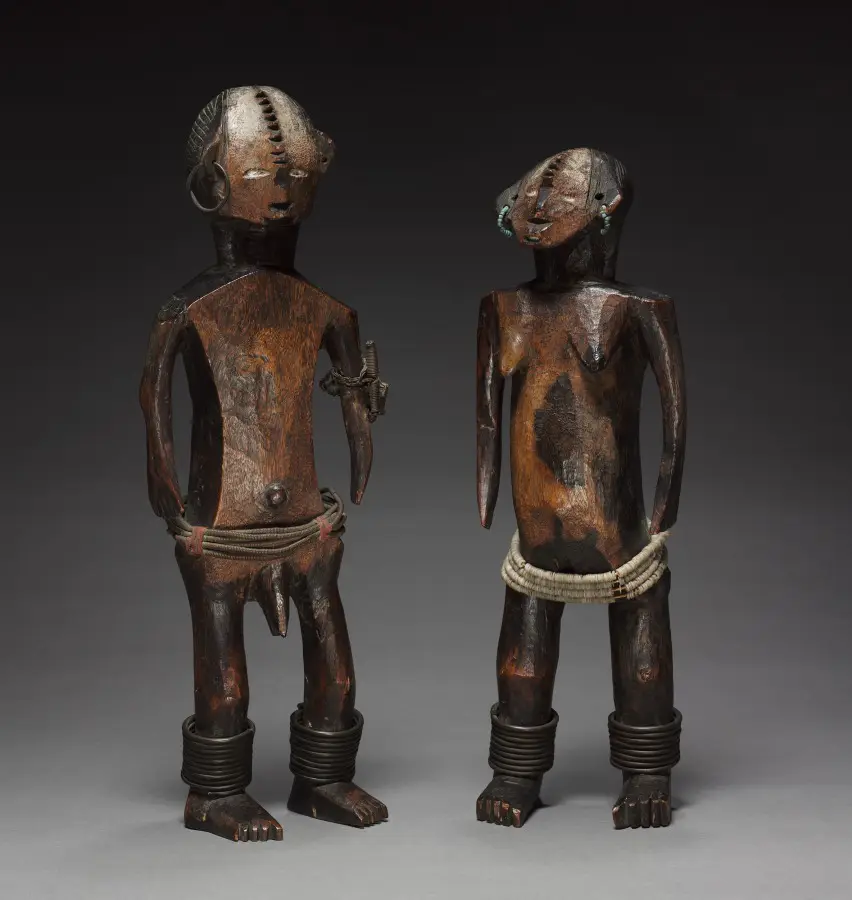
Cleveland Museum of Art168757squarelate 1800s–early 1900sCC0cma african-global-heritage flora-fauna objects-with-gravity african global heritage flora fauna objects with gravity african art wood sculpture figurative ancestor ritual tribal dark wood carving ethnic traditional statuary brown grey abstract pair figureslate 1800s–early 1900s Africa, Central Africa, Democratic Republic of Congo, probably Ngbandi-style carver Wood, iron alloy, copper alloy, glass beads, plant fiber, and cloth Sculpture AfricanAfrican & Global Heritage The Living World Objects with Gravity
Practical reuse
Use this artwork.
Verified CC0
This record carries an explicit open-use marker in the source metadata. Download the publication copy or follow the museum record for its master image.
Pair of Figures (late 1800s–early 1900s). René and Odette Delenne Collection, Leonard C. Hanna Jr. Fund Rights: CC0. https://clevelandart.org/art/2010.459
Vault de Lupin makes the source signal legible; it does not provide legal advice or replace the institution’s current rights statement.
From the museum record
These paired wooden figures are adorned with metal, bead, and shell ornaments at the ears, waists, and ankles. An ornament on the male's upper arm may identify him as a warrior. Each figure has a series of vertically aligned bumps on the forehead. These represent highly raised keloid scars that were culturally meaningful forms of body modification. Carving of paired figures is quite well documented among the Ngbandi and their neighbors, the Ngbaka-Minagende, where such sculptures are said to represent the mythical ancestor Seto and his sister-wife, Nabo. Field-based research cannot confirm the existence of figurative couples among the Ngbandi.
Lupin’s visual index
Two intricately carved wooden figures, reminiscent of ancestral spirits, stand against a dark gray background.
Machine-assisted description · useful for discovery, not scholarship.
.webp)