Vol. I · The open image paperWinnipeg · Musée sans mursRecovered · Remembered · Returned
Cleveland Museum of Art159488portraitHendrik van Balen (Flemish, 1575–1632)c. 1620CC0cma sacred-art objects-with-gravity sacred art objects with gravity christ entombment baroque religious art painting italian art jesus angels mourning gold red pale 17th century grave suffering death the trinityHendrik van Balen (Flemish, 1575–1632) c. 1620 Flanders oil on wood Painting European ReligiousSacred & Devotional Objects with Gravity
Practical reuse
Use this artwork.
Verified CC0
This record carries an explicit open-use marker in the source metadata. Download the publication copy or follow the museum record for its master image.
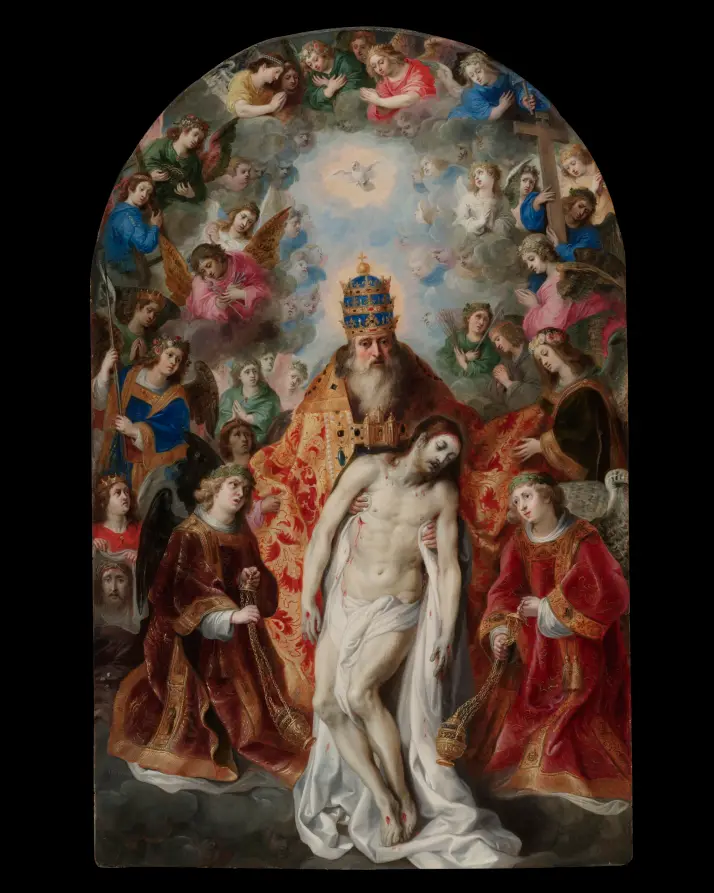
The Trinity by Hendrik van Balen (Flemish, 1575–1632) (c. 1620). Mr. and Mrs. William H. Marlatt Fund Rights: CC0. https://clevelandart.org/art/1996.26
Vault de Lupin makes the source signal legible; it does not provide legal advice or replace the institution’s current rights statement.
From the museum record
This vividly colored altarpiece was made in Antwerp, the center of religious learning in Catholic Flanders. In the mid-1500s when the Catholic Church mounted a defense against the spread of Protestant reforms, known as the Counter-Reformation, it encouraged the production of religious images that promoted Catholic doctrine, offering opportunities for artists like Rubens, Van Dyck, and Van Balen. Van Balen’s painting depicts the traditional theme of the Trinity, with God the Father holding the dead Christ and the dove of the Holy Spirit hovering above. Unusually, God wears the purple papal tiara, intended to emphasize the pope’s role as God’s true representative on earth. Encircling the figures of the Trinity are angels holding the instruments of Christ’s Passion. On the clasp of God’s elaborate cape is a small figure of Saint Barbara, perhaps a clue to the original location of the work in a chapel dedicated to her.
Lupin’s visual index
a baroque painting depicts the deposition of christ from the cross, surrounded by angels and mourners.
Machine-assisted description · useful for discovery, not scholarship.
.webp)