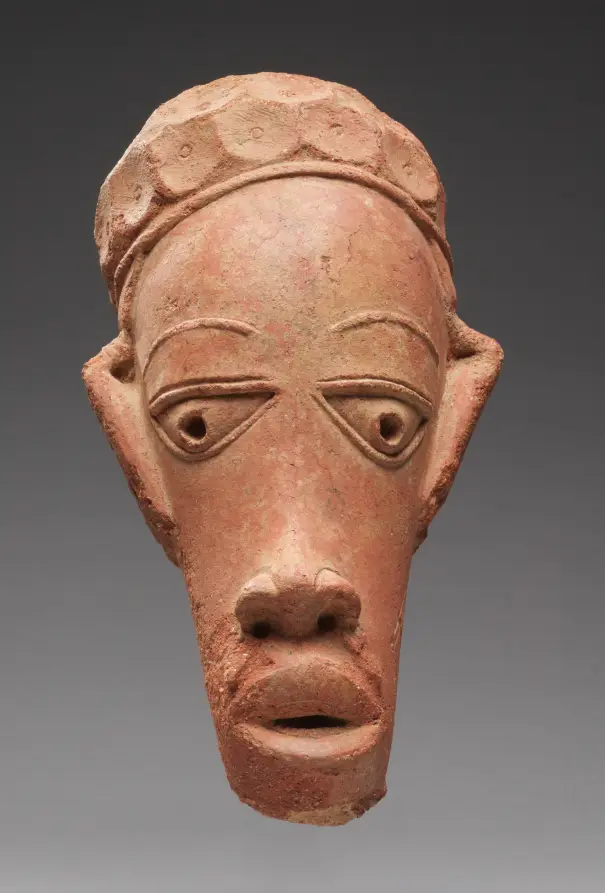
Head
Practical reuse

Use this artwork.

Verified CC0

This record carries an explicit open-use marker in the source metadata. Download the publication copy or follow the museum record for its master image.

Download publication WebP Open museum master ↗
Rights signal
CC0
Publication file
605 × 893 px · WebP
Suggested credit
Head (thermoluminescence date 20–620 CE). Andrew R. and Martha Holden Jennings Fund Rights: CC0. https://clevelandart.org/art/1995.21

Vault de Lupin makes the source signal legible; it does not provide legal advice or replace the institution’s current rights statement.

From the museum record

More than 500 such sculptures—often full figures with elaborate hairstyles and jewelry— have been found in central Nigeria. Named after a discovery site, Nok culture (500 BCE–200 CE or 1500–1 BCE) produced the earliest large figurative artworks in Africa outside of Egypt. Little was known about their social context, as they were first found in mining deposits in the 1920s. Archaeological excavations conducted in the 2000s by a German-Nigerian team suggest that many sculptures were deliberately broken and placed under pavements and in pits, indicating ritual practice. Male-centered art histories presumed men made these figurative sculptures; however, they incorporate building and firing techniques practiced only by women.

Lupin’s visual index

A reddish-brown terracotta mask depicts a stylized African face with a prominent headdress and deep-set eyes.

Machine-assisted description · useful for discovery, not scholarship.
Continue looking

Nearby in the vault.

Head

Head

Your private shortlist

Saved works 0

Stored only in this browser. No account, tracking, or upload.

No works saved yet.

Use “Save work” on any catalogue card or artwork record to build a working collection.