Vol. I · The open image paperWinnipeg · Musée sans mursRecovered · Remembered · Returned
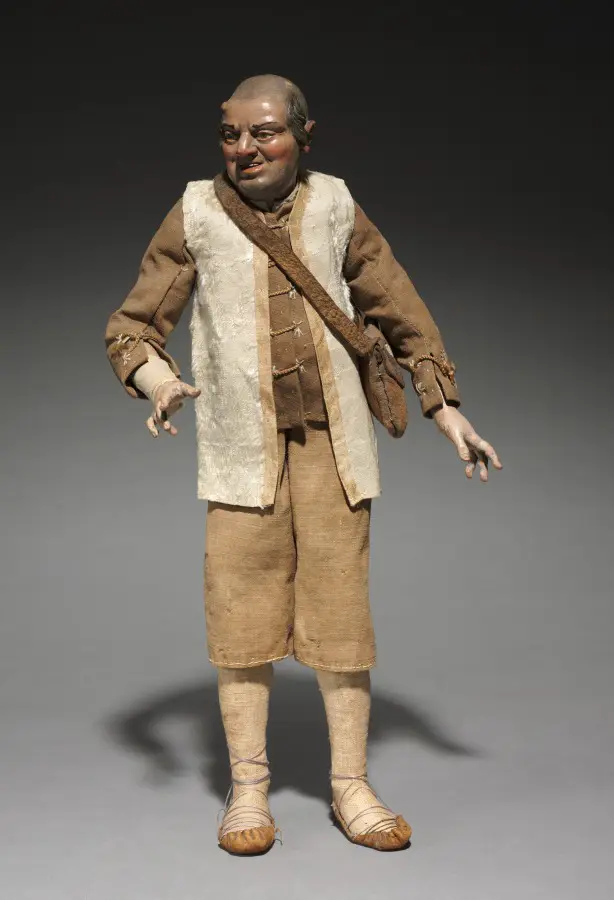
Cleveland Museum of Art146990portrait1780–1830CC0cma symbols-patterns portraits objects-with-gravity symbols patterns objects with gravity figure wooden painting man historical 18th century ceremonial clothing beige brown facial features portrait doll folk art textile detail antique artisan traditional crèche1780–1830 Italy, Naples, late 18th-early 19th century painted wood and terracotta with various textiles Sculpture PortraitSymbols & Ornament Faces in Time Objects with Gravity
Practical reuse
Use this artwork.
Verified CC0
This record carries an explicit open-use marker in the source metadata. Download the publication copy or follow the museum record for its master image.
Figure from a Crèche (1780–1830). Gift of the Womens Council of the Cleveland Museum of Art Rights: CC0. https://clevelandart.org/art/1972.368.2
Vault de Lupin makes the source signal legible; it does not provide legal advice or replace the institution’s current rights statement.
From the museum record
The practice of creating scenes of the Nativity for the home dates from the early 1700s in Italy, where people began to set up doll-like figures of about a foot or less in height. The custom was particularly popular in Naples around 1800, where crèche scenes (crèche means cradle, or crib) included many figures, whose heads and hands of painted terracotta, stuffed cloth bodies, and clothing adapted from contemporary local costumes gave them an amazingly realistic character. Representations of the birth of Jesus can be traced to the first few centuries of Christianity. Both living creatures and sculptural depictions of them were used from early times. By the late middle ages it was customary to create life-size figures of wood or stone, naturalistically painted, to represent the characters who participated in the events of Jesus's early life. These sculptures were then arranged in scenes illustrating one or both of the most important of these events, the Adoration of the Shepherds and the Adoration of the Magi-the three kings from the East who came to pay homage to the Christ child. Used in churches, these large figures were especially popular in Italy, Central Europe, Spain, and Portugal.
Lupin’s visual index
A detailed, painted wooden figure depicts a man in 18th-century attire, showcasing intricate facial features and clothing details.
Machine-assisted description · useful for discovery, not scholarship.
.webp)