Vol. I · The open image paperWinnipeg · Musée sans mursRecovered · Remembered · Returned
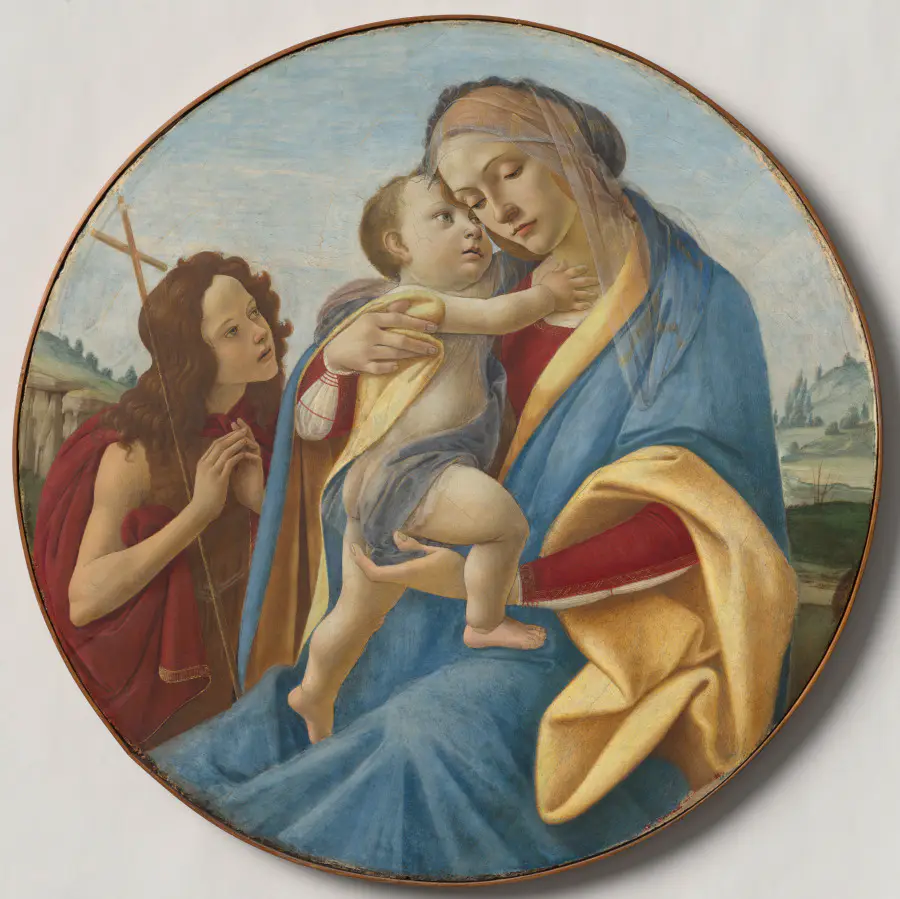
Cleveland Museum of Art144966squareSandro Botticelli (Italian, 1444/45–1510)c. 1490CC0cma sacred-art portraits landscapes objects-with-gravity sacred art objects with gravity virgin mary jesus saint john holy family renaissance italian art oil painting religious art landscape blue gold portrait classical detailed serene muted colors virgin and child the young saint john baptistSandro Botticelli (Italian, 1444/45–1510) c. 1490 Italy, 15th century tempera and oil on wood Painting European ReligiousSacred & Devotional Faces in Time Horizons & Places Objects with Gravity
Practical reuse
Use this artwork.
Verified CC0
This record carries an explicit open-use marker in the source metadata. Download the publication copy or follow the museum record for its master image.
Virgin and Child with the Young Saint John the Baptist by Sandro Botticelli (Italian, 1444/45–1510) (c. 1490). Leonard C. Hanna Jr. Fund Rights: CC0. https://clevelandart.org/art/1970.160
Vault de Lupin makes the source signal legible; it does not provide legal advice or replace the institution’s current rights statement.
From the museum record
The perfectly round form, called a tondo, became popular during the 1440s, especially in Florence. Made for domestic settings instead of churches, the circular format challenged the artist to create a harmonious, balanced composition within this more difficult shape. The attribution has been a matter of debate. Botticelli often collaborated with students, including Filippino Lippi, who would himself become a significant painter. Few specialists have doubted that Botticelli executed the central passages: the delicate modeling of the faces, the graceful poses, the figures’ profound interiority, and the diaphanous veil are the artist’s hallmarks. However, someone else in Botticelli’s studio probably painted Mary’s blue garment, also the most heavily restored part of the painting.
Lupin’s visual index
a circular painting depicts the virgin mary holding the infant jesus, accompanied by saint john the evangelist.
Machine-assisted description · useful for discovery, not scholarship.
.webp)