Vol. I · The open image paperWinnipeg · Musée sans mursRecovered · Remembered · Returned
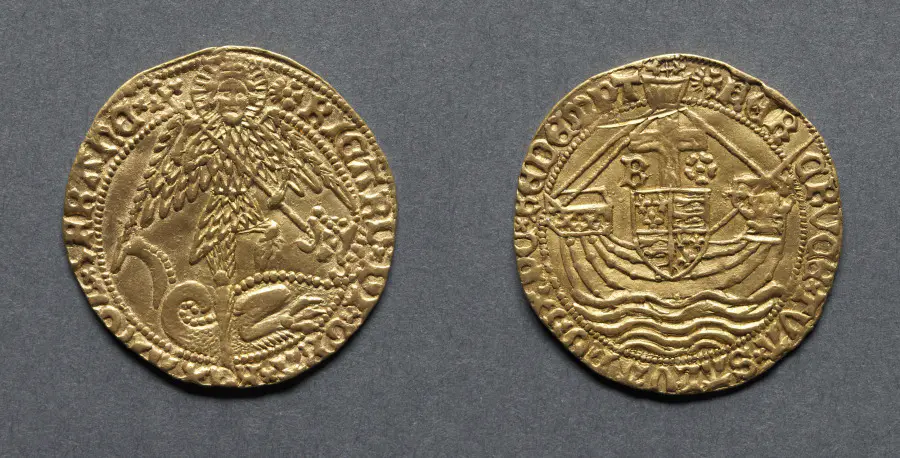
Cleveland Museum of Art144394landscape1483–85CC0cma african-global-heritage sacred-art portraits landscapes african global heritage sacred art coin gold tudor heraldry english monumental medieval currency numismatics portrait ship seal metalwork antique wealth historical angel george slaying the dragon obverse shield arms and cross reverse1483–85 England, Richard III, 1483-1485 gold Coins PortraitAfrican & Global Heritage Sacred & Devotional Faces in Time Horizons & Places
Practical reuse
Use this artwork.
Verified CC0
This record carries an explicit CC0 marker in the source metadata. Download the publication copy or follow the source record for its master image.
Angel: St. George Slaying the Dragon (obverse); Ship with Shield of Arms and Cross (reverse) (1483–85). The Norweb Collection Rights: CC0. https://clevelandart.org/art/1969.168
Vault de Lupin makes the source signal legible; it does not provide legal advice or replace the institution’s current rights statement.
From the museum record
This coin is similar to the angel of Henry VI, 1969.167 , but from completely different dies. Between the second reign of Edward IV and the reign of Richard III, Edward V, at the age of 13, reigned briefly from April 9 to June 22, 1483. Richard, Edward's uncle, caused the boy to be imprisoned in the Tower where he and his younger brother were murdered at the instigation of Richard. Their bodies were buried under a staircase and lay undiscovered for 200 years. Richard, who had been Protector during the reign of Edward V, was crowned king. The initial mark, half-rose and sun, once thought to indicate the coins of Edward V, was been assigned to those of Edward IV. The only coins of Edward V which can definitely be attributed to his reign are those with the mink mark boar's head that was also the mark of Richard III. Only five examples of gold angels of Edward V exist.
Lupin’s visual index
Two gold coins from the Tudor period display intricate heraldic designs and lettering.
Machine-assisted description · useful for discovery, not scholarship.