Vol. I · The open image paperWinnipeg · Musée sans mursRecovered · Remembered · Returned
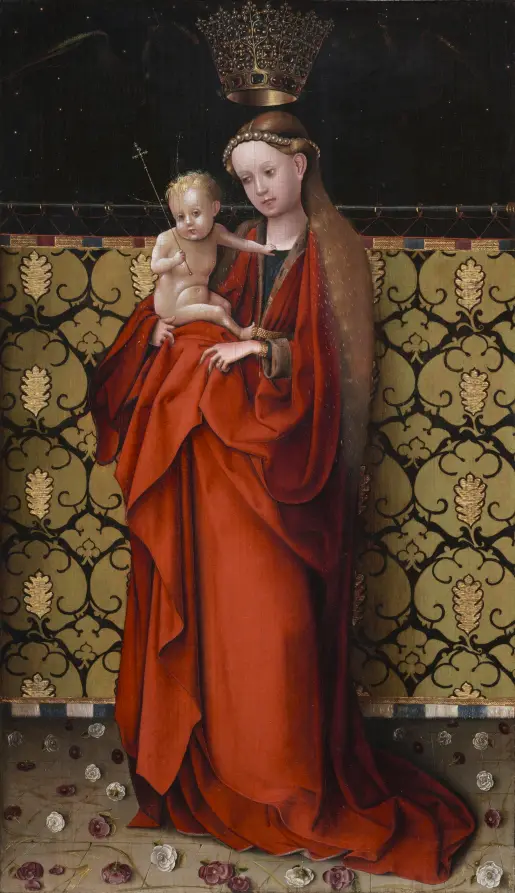
Cleveland Museum of Art143761portraitStefan Lochner (German, 1400-c. 1452)c. 1450CC0cma sacred-art portraits objects-with-gravity sacred art objects with gravity virgin mary jesus child religious art renaissance painting portrait medieval gold red crown floral ornate detailed serene muted religious italian art adoration the virgin crowned angelsStefan Lochner (German, 1400-c. 1452) c. 1450 Germany, Cologne oil on wood Painting European ReligiousSacred & Devotional Faces in Time Objects with Gravity
Practical reuse
Use this artwork.
Verified CC0
This record carries an explicit CC0 marker in the source metadata. Download the publication copy or follow the source record for its master image.
The Virgin Crowned by Angels by Stefan Lochner (German, 1400-c. 1452) (c. 1450). John L. Severance Fund Rights: CC0. https://clevelandart.org/art/1968.20
Vault de Lupin makes the source signal legible; it does not provide legal advice or replace the institution’s current rights statement.
From the museum record
Two angels, barely visible against a dark background, crown Mary as the Queen of Heaven. Her slight features are made more substantial by her elaborately draped, brilliant crimson mantle. Holding the Christ child, she stands on a floor scattered with red and white roses, symbols of her purity. Green palmettes enriched with costly gold thread decorate the velvet. Since silk velvet was not woven in the north, Italian velvets were frequently depicted in northern paintings during the 1400s. Lochner is thought to have come from Meersburg in southwest Germany, and is recorded as being in Cologne by 1442, where he was paid for decorations in connection with the celebration of the visit of Emperor Frederick III. He was elected town councillor by the painters’ guild in 1447 and 1450. There are no records of him after 1451.
Lupin’s visual index
A serene Virgin Mary holds the infant Jesus, adorned in a rich red robe and a golden crown, depicted in a traditional religious painting style.
Machine-assisted description · useful for discovery, not scholarship.