Vol. I · The open image paperWinnipeg · Musée sans mursRecovered · Remembered · Returned
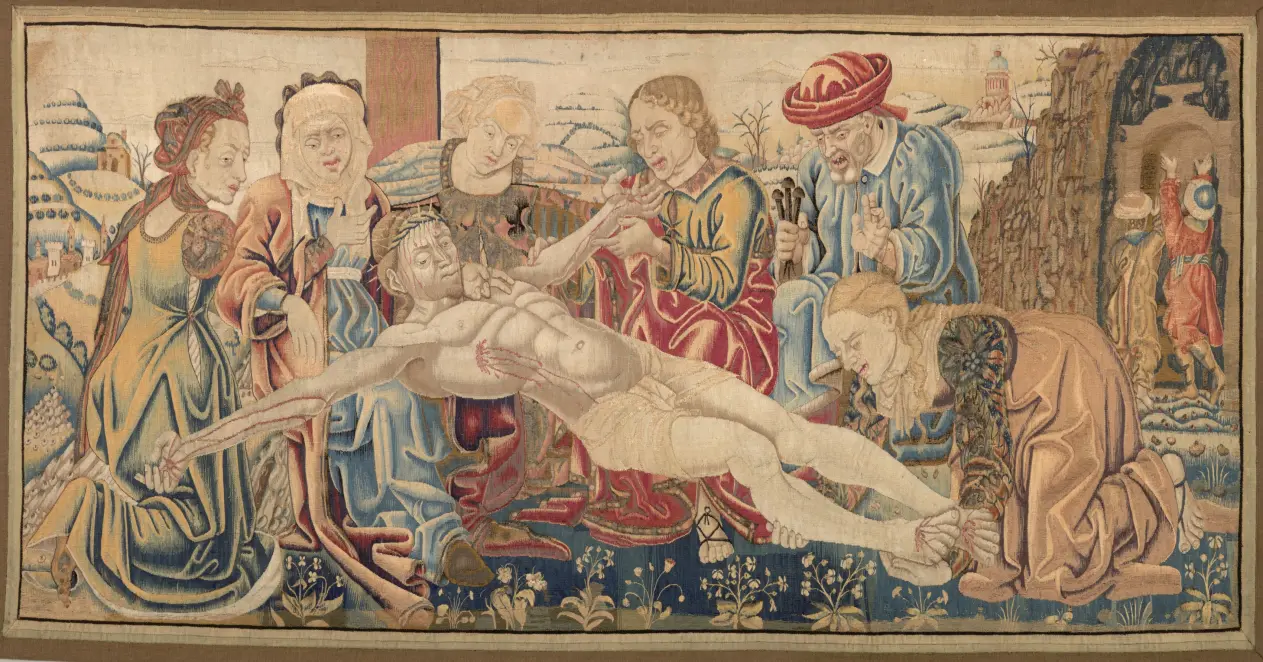
Cleveland Museum of Art127459landscapeCosimo Tura (Italian, c. 1430–1495)c. 1474CC0cma sacred-art symbols-patterns portraits sacred art symbols patterns tapestry weaving religious art christian entombment jesus christ mourning disciples medieval wool silk gold thread historical renaissance textile portrait figure altar frontal the lamentationCosimo Tura (Italian, c. 1430–1495) c. 1474 Italy, Ferrara Wool, silk, gold and silver threads Tapestry European ReligiousSacred & Devotional Symbols & Ornament Faces in Time
Practical reuse
Use this artwork.
Verified CC0
This record carries an explicit open-use marker in the source metadata. Download the publication copy or follow the museum record for its master image.
Altar Frontal with the Lamentation by Cosimo Tura (Italian, c. 1430–1495) (c. 1474). John L. Severance Fund Rights: CC0. https://clevelandart.org/art/1950.145
Vault de Lupin makes the source signal legible; it does not provide legal advice or replace the institution’s current rights statement.
From the museum record
A decorative textile suspended along the altar’s entire front, an altar frontal was often embellished with gold and silver threads, as seen here. This rare example depicts the lamentation of Christ, a common subject in Christian art in which the body of Christ is mourned after its removal from the cross. This version is highly acclaimed for its emotional intensity. Christ’s body is arranged in the shape of the cross, his shoulder rests on the Virgin’s knees, Saint John the Evangelist cradles his left arm, and Mary Magdalene supports his feet. Joseph of Arimathea carries the three nails with which Christ was crucified. This altar cloth was designed by Cosimo Tura who was employed at the court of Ercole I d’Este, duke of Ferrara, as a painter, illuminator, and tapestry designer between 1475 and 1484. His design was woven by Rubinetto di Francia, who was head of a large tapestry workshop at Ercole’s court. The subject of the design would imply its use during the Easter season.
Lupin’s visual index
this large tapestry depicts the biblical scene of christ's entombment, surrounded by mourners and disciples.
Machine-assisted description · useful for discovery, not scholarship.
.webp)