Vol. I · The open image paperWinnipeg · Musée sans mursRecovered · Remembered · Returned
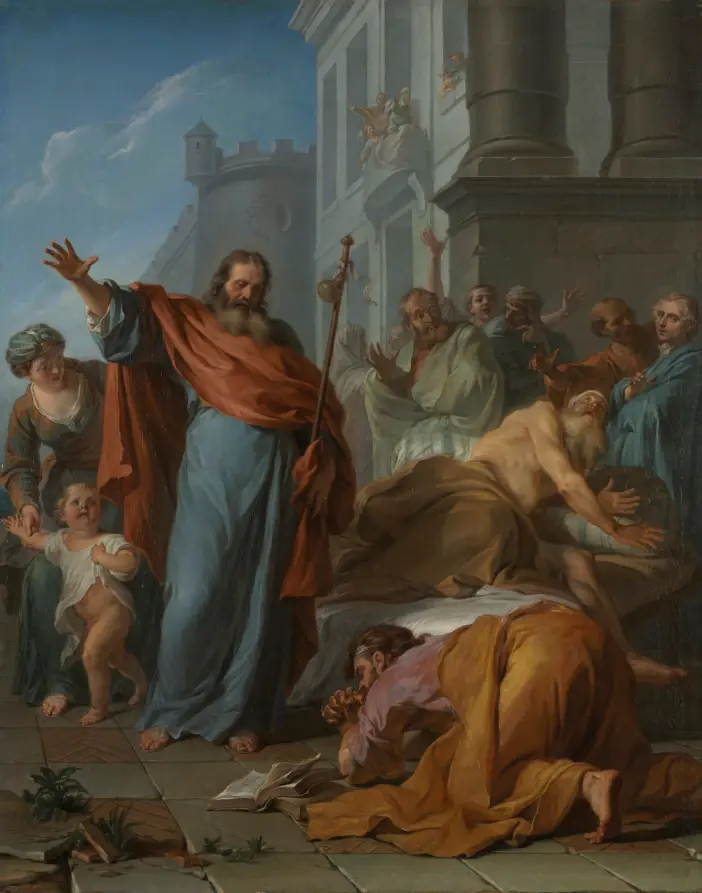
Cleveland Museum of Art111479portraitNoël Nicolas Coypel (French, 1690–1734)1726CC0cma sacred-art portraits objects-with-gravity sacred art objects with gravity saint luke paralytic healing religious art christian art baroque painting roman architecture oil painting pale blue brown tones classical 17th century group portrait religious scene male figures female figure child marble columns serene detailed the miracles saint james greaterNoël Nicolas Coypel (French, 1690–1734) 1726 France, 18th century oil on canvas Painting European ReligiousSacred & Devotional Faces in Time Objects with Gravity
Practical reuse
Use this artwork.
Verified CC0
This record carries an explicit CC0 marker in the source metadata. Download the publication copy or follow the source record for its master image.
The Miracles of Saint James the Greater by Noël Nicolas Coypel (French, 1690–1734) (1726). Gift of Felix Wildenstein Rights: CC0. https://clevelandart.org/art/1929.96
Vault de Lupin makes the source signal legible; it does not provide legal advice or replace the institution’s current rights statement.
From the museum record
Noël Nicolas Coypel combined two stories associated with Saint James the Greater, one of the twelve apostles of Christ. In the foreground is the magician Hermogenes, begging forgiveness. Hermogenes had cast a spell on James, but the saint turned the curse back on him. When James offered to protect Hermogenes against the demons assaulting him, the magician cast aside his pagan texts in favor of Christianity. According to the second legend, James miraculously cured a paralytic man (in the middle ground at right), thereby averting his own execution and causing the prosecutor to convert. Although this painting is relatively small, the clear composition, grand architectural setting, and dignified and expressive poses of the figures endow it with monumental presence.
Lupin’s visual index
A group of men, including Saint Luke, gather around a paralyzed man receiving healing in a classical Roman setting.
Machine-assisted description · useful for discovery, not scholarship.