Vol. I · The open image paperWinnipeg · Musée sans mursRecovered · Remembered · Returned
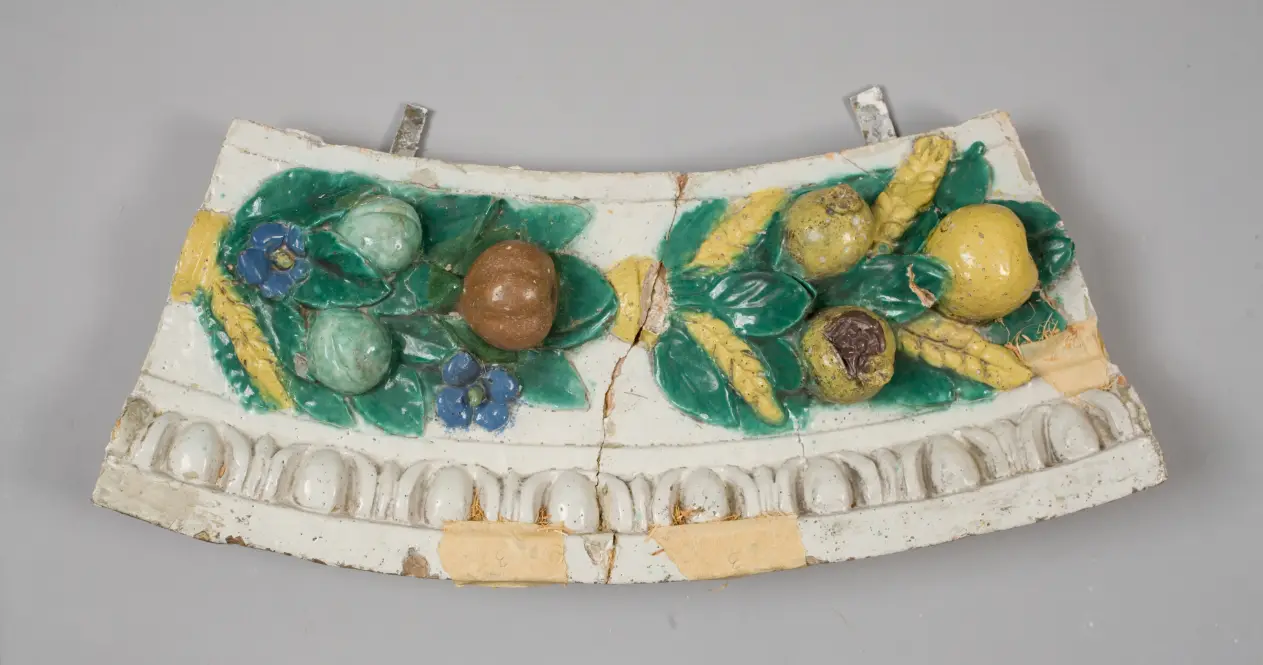
Cleveland Museum of Art102550landscapeBenedetto Buglioni (Italian, 1461–1521)c. 1900–1910CC0cma symbols-patterns flora-fauna objects-with-gravity symbols patterns flora fauna objects with gravity ceramic relief fruit still life ornate decorative white green yellow brown vintage antique italian artisan textured relief sculpture fruit bowl fragmentBenedetto Buglioni (Italian, 1461–1521) c. 1900–1910 Italy, Florence glazed terracotta Sculpture European Still-LifeSymbols & Ornament The Living World Objects with Gravity
Practical reuse
Use this artwork.
Verified CC0
This record carries an explicit CC0 marker in the source metadata. Download the publication copy or follow the source record for its master image.
Fragment by Benedetto Buglioni (Italian, 1461–1521) (c. 1900–1910). Gift of J. H. Wade Rights: CC0. https://clevelandart.org/art/1921.1180.a
Vault de Lupin makes the source signal legible; it does not provide legal advice or replace the institution’s current rights statement.
From the museum record
The Madonna sits upon a throne with the Christ Child standing on her knee. He is steadied by his mother, turning delicately to grasp the Virgin's robe for support. On the left is St. Francis, identified by his stigmata. On the right, St. Anthony Abbot is identified by his monk's robe and T-shaped walking stick. The brown robes of the saints, the purple of the Virgin's tunic (a shade characteristic of the artist), and the flesh tones of the figures contrast strongly against the bright blue background. In the semicircular sky behind the figures, three winged cherub heads emerge, representing a host of angels. The inclusion of St. Francis in this altarpiece honors the saint, suggesting that the altarpiece may have been originally built into the wall of a Franciscan institution in Tuscany. Two shields bearing the Borgherini family crest appear in the lower portion of the altarpiece's border, further suggesting that the chapel for which this altarpiece was made was likely owned or endowed by the family. Glazed terracotta is both durable and decorative and the gleaming white of this piece would have stood out in the darkness of a church. The medium was made popular by Renaissance artist Luca della Robbia and came into fashion as a substitute for expensive carved marble. A rounded arch frame embellished with fruit and flower garlands as well as egg-and-dart and cord moldings accompanied the work when it was acquired, but was later determined not to be original and removed. Buglioni's work bears the influence of the della Robbias, particularly in the simple color scheme. Buglioni likely worked in the studio of Luca's nephew, Andrea, where he would have learned the technique of glazing terracotta.
Lupin’s visual index
A weathered ceramic relief panel depicts a still life of various fruits arranged on a curved white base.
Machine-assisted description · useful for discovery, not scholarship.